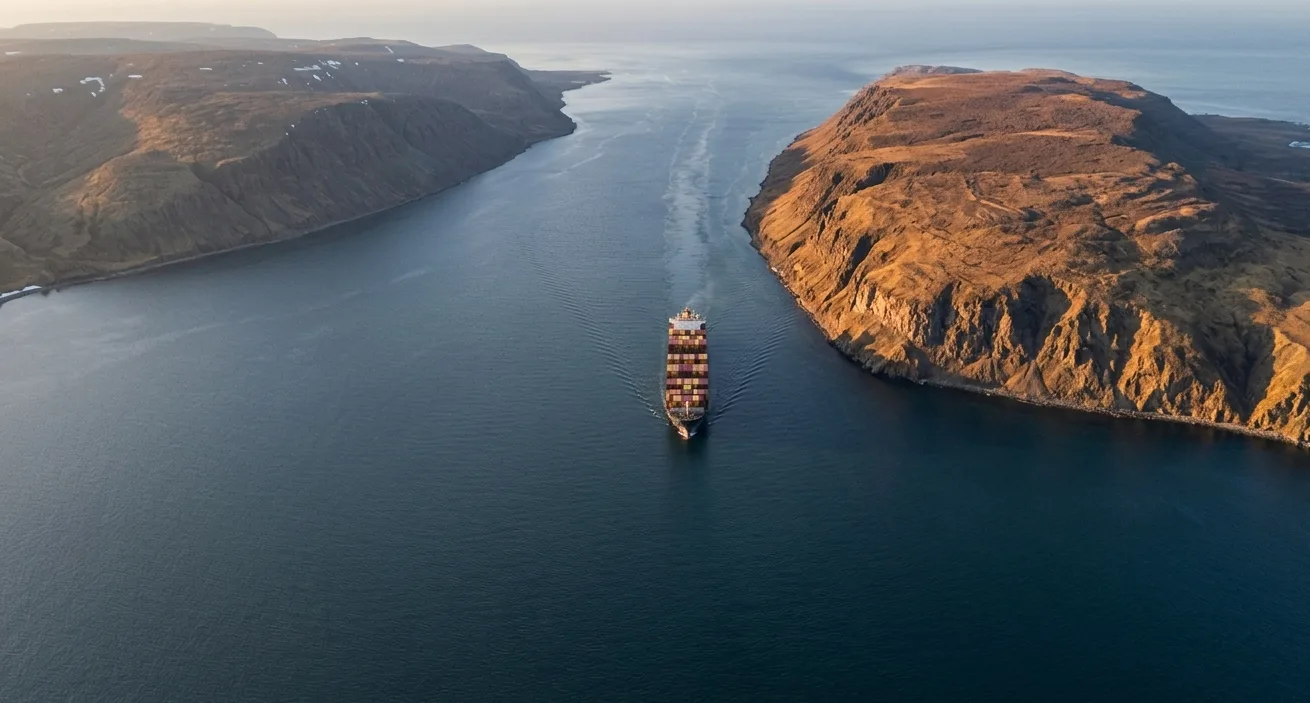
Eighty percent of everything you own touched a ship. And almost all of it passed through one of about a dozen narrow stretches of water that most people couldn't find on a map. In 2026, those stretches stopped being background infrastructure and became headline risk. Iran shut Hormuz. An Indonesian minister floated a Malacca transit toll, then withdrew it within two days. The IMO opened MEPC 84 with a resolution condemning attacks on commercial shipping. The Panama Canal entered another El Niño watch. The era when chokepoints were quiet plumbing is over.
For voyage planners, charterers, and shippers, the question is no longer whether chokepoints carry risk. It's which ones, how badly, and what alternatives actually work. This is a 2026 map of every meaningful pressure point in the global maritime network — what flows through them, what could close them, and what happens if it does.
The Risk Matrix
Not all chokepoints are equal. Some are physically irreplaceable — close them and trade stops. Others are inconvenient but routable around. The honest analysis groups them by two dimensions: how active the current risk is, and whether viable alternatives exist.
Tier 1: Active Crisis (Hormuz, Bab el-Mandeb)
These are the chokepoints where 2026 is actively rewriting the rules. Both are in the Middle East. Both have seen sustained disruption. Neither has a real maritime alternative for the cargo they carry.
Strait of Hormuz
The world's most consequential 33-kilometer stretch of water. Roughly 20% of global crude oil and one-third of LNG passes through Hormuz under normal conditions. After the US-Iran conflict began, daily transits collapsed from 95 vessels to fewer than 10. War risk insurance premiums tripled. Approximately 20,000 seafarers were stranded on 2,000 vessels in the Persian Gulf at peak disruption.
The brutal truth about Hormuz: there is no maritime alternative. Saudi Arabia has the East-West Petroline pipeline (5 million barrels per day capacity) that bypasses the strait. The UAE has the Habshan-Fujairah pipeline (1.8 million b/d). But Qatar, Kuwait, Iraq, and Iran combined still send the majority of their hydrocarbons through Hormuz. When Hormuz closes, that crude doesn't reroute. It stops.
Bab el-Mandeb / Red Sea
The southern gate to the Suez Canal. Approximately 4.8 million barrels per day of oil and 12-13% of global container trade transit Bab el-Mandeb under normal conditions. Houthi attacks since November 2023 have driven container traffic to roughly half of pre-crisis levels, with most container lines opting for the Cape of Good Hope rerouting that adds 10-14 days and 3,500 nautical miles per voyage.
Unlike Hormuz, Bab el-Mandeb has an alternative: the Cape. It just costs 35% more in fuel and time. For container shipping with predictable schedules, the math has favored the Cape for over two years now.
Tier 2: Elevated Risk (Suez, Malacca, Panama)
Suez Canal
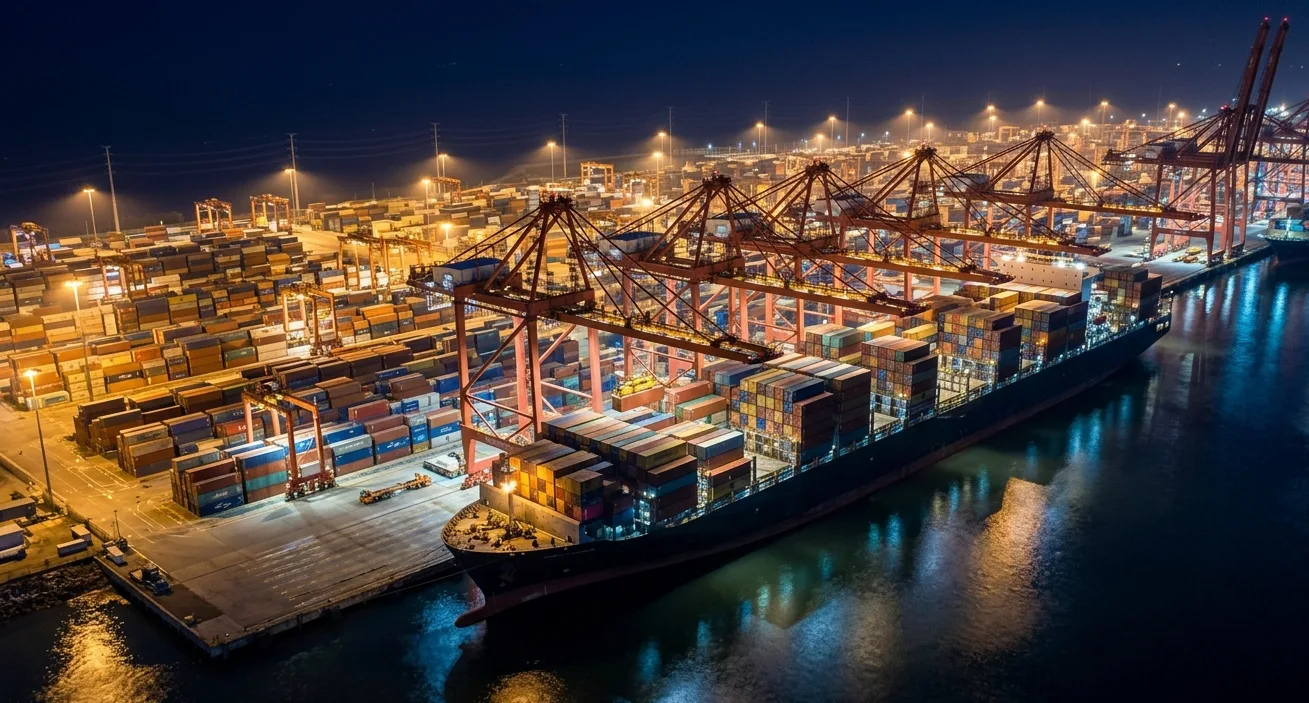
Suez itself is operating normally. The canal is open, transit times are stable, the Suez Canal Authority reports vessel traffic continues. The disruption is upstream — at Bab el-Mandeb. Most container lines still route around the Cape rather than risk the Red Sea approach.
Egypt's canal revenues have fallen sharply since the Houthi crisis began, with published estimates of the shortfall ranging into the billions. Annual trade exposed to disruption: roughly $88 billion. If Bab el-Mandeb stabilizes, Suez throughput recovers — but a sudden return to Suez routing creates its own disruption (analysts warn of port congestion as 8-week voyages collapse to 2-week voyages overnight).
Strait of Malacca
Roughly 25% of global maritime trade and 30% of container traffic passes through the Malacca Strait, which connects the Indian Ocean to the South China Sea via the gap between Malaysia, Singapore, and Indonesia. On April 22, 2026, Indonesia's Finance Minister raised the idea of a transit toll. Markets reacted immediately and the position was withdrawn within 48 hours.
Under UNCLOS, charging tolls would be illegal. Singapore and Malaysia immediately rejected the idea. But the fact that it was floated at all signals how far the rules-based maritime order has drifted. Maritime alternatives exist — the Lombok and Sunda Straits add 1-3 days to a voyage — but at current Malacca volumes, they cannot absorb full diverted traffic.
Panama Canal
The canal that climate change is teaching to behave. The 2023-2024 drought cut daily transits from 36-38 to as few as 18, sent auction slot prices over $2 million per transit, and pushed LNG and bulk carriers toward Cape routings. Water levels recovered through 2025 — Gatun Lake even hit spillway-release territory in early 2026 — but NOAA issued an El Niño Watch in April 2026, projecting development by mid-year.
The Panama Canal Authority is building a new dam on the Rio Indio (estimated $1.6 billion, completion 2032). It will not be ready for the next El Niño. Approximately 40% of all US container traffic passes through the canal — Trans-Pacific routes don't have a clean alternative without adding 10+ days via Magellan or Cape Horn.
Tier 3: Often Forgotten — But Critical
These are the chokepoints that don't make headlines, but carry enough trade that disruption would ripple instantly through supply chains.
Turkish Straits (Bosphorus + Dardanelles)
The Bosphorus is one of the world's narrowest commercial waterways — 750 meters across at its tightest point, threading through Istanbul's 11 million inhabitants. The Turkish Straits are the only maritime exit from the Black Sea, making them a single point of failure for Russian Black Sea oil exports, Ukrainian grain shipments, and Romanian and Bulgarian seaborne trade.
The Montreux Convention of 1936 governs commercial passage rights. Turkey retains regulatory authority for safety and environmental purposes. Mechanical incidents are common — a vessel breakdown can suspend traffic in both directions for hours, as it did multiple times in late April 2026. There is no maritime alternative. The Black Sea is sealed.
Danish Straits
The exit from the Baltic Sea — Russian crude and product exports from St. Petersburg, Primorsk, and Ust-Luga must transit the Danish Straits to reach world markets. Since 2022, this corridor has become the primary egress for Russia's "shadow fleet" of older tankers operating under flags of convenience and unclear insurance.
Denmark and the wider Nordic-Baltic region have been increasing inspections and challenging shadow fleet vessels, while sabotage incidents on undersea cables and pipelines have raised maritime infrastructure security concerns. The Kiel Canal offers a partial alternative for smaller vessels but cannot accommodate the larger tankers.
Strait of Gibraltar
The only maritime exit from the Mediterranean. Roughly 100,000 vessels transit per year, including all Mediterranean trade and Russian/North African energy exports. Gibraltar itself remains stable — tensions in 2025 over fishing rights and Spain's post-Brexit jurisdictional claims have not threatened transit. There is no alternative; the Mediterranean is otherwise sealed.
Dover Strait / English Channel
About 400 vessels per day, the busiest narrow waterway in the world. Collision risk is the primary concern — multiple incidents per year, periodic suspensions for salvage. The North Atlantic offers a slow alternative (+1 day) for vessels that can avoid the Channel, but most North Sea trade has no realistic detour.
The Alternative-Route Truth
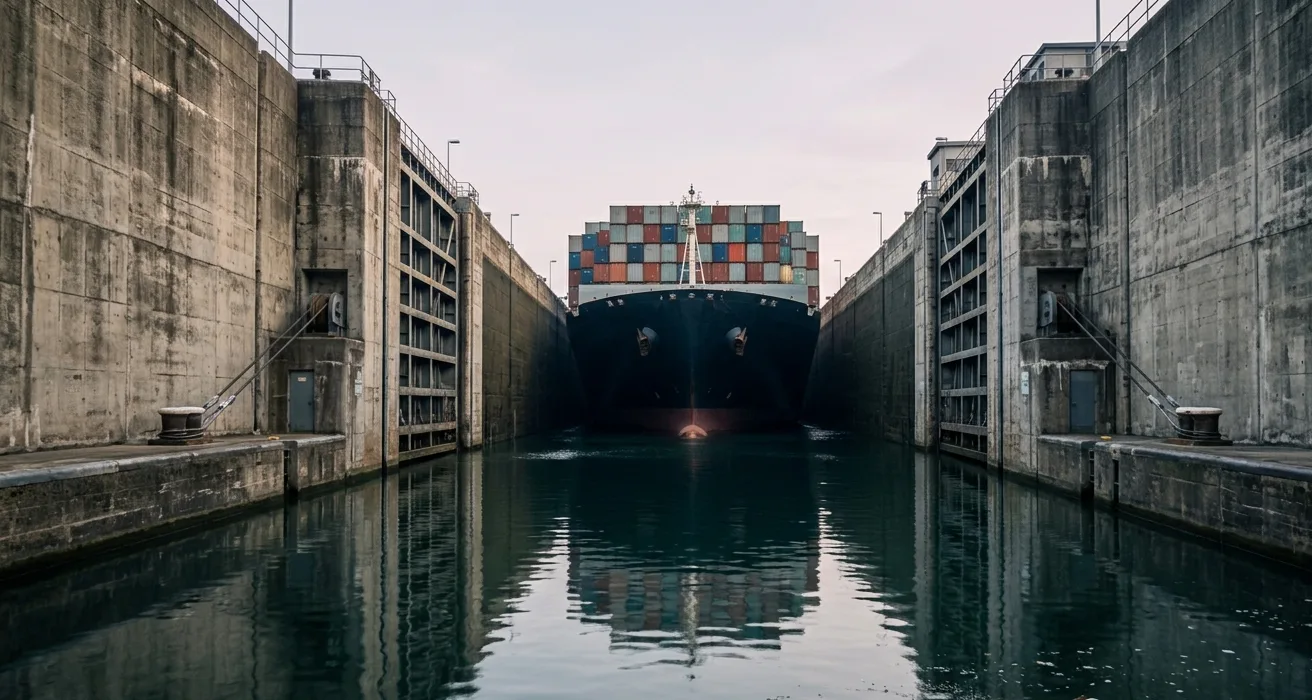
Every chokepoint analysis eventually confronts the same question: where can ships actually go instead? The answer is more constrained than headlines suggest.
For Hormuz and the Turkish Straits, "0 days" reflects the absence of any maritime alternative — partial pipeline capacity exists for Hormuz but cannot replace seaborne flow at scale.
The Real Cost: Insurance, Not Just Distance
Voyage planners often focus on distance and fuel when modeling chokepoint detours. The bigger swing factor in 2026 is insurance. War risk premiums on Hormuz and Red Sea transits during peak crisis periods rose by 20-60 times normal levels. For a vessel and cargo with combined insured value of $200 million, that translates to insurance costs jumping from approximately $50,000 to over $1 million per transit.
These premiums flow directly into freight rates. Container lines added war risk surcharges of $500-2,000 per TEU during peak Red Sea disruption. Tanker rates on Hormuz-affected routes saw similar magnitude moves in time charter equivalent. The IMO MEPC 84 resolution adopted on May 1 explicitly warned of pollution and economic risks from continued chokepoint attacks — language that further hardens insurance market posture.
What Voyage Planners Should Do
Chokepoint risk has moved from background variable to primary planning input. Three concrete actions for 2026:
Model chokepoint scenarios, not just routes. Voyage estimates that assume normal operating conditions for every chokepoint are systematically optimistic. Build "Hormuz disruption" and "Panama drought" sensitivity scenarios into voyage P&L from the start. Compare Suez, Cape, and Panama options for any port pair on the Voyage Calculator to see real-time distance and time differences.
Track insurance market signals. War risk premium changes are the leading indicator of chokepoint crisis. Insurance rate moves precede actual transit volume drops by days to weeks. Voyage planners with insurance broker relationships have a strategic information advantage.
Diversify bunkering geography. When chokepoints disrupt, alternative bunker hubs see demand spikes. Singapore, Rotterdam, and Fujairah remain primary, but contingency bunkering at Las Palmas, Durban, Algeciras, and Colombo deserves planning attention. Track real-time bunker prices across 45 ports on the Fairway ETA Data Hub.
Watch the policy signals. MEPC 84's Hormuz resolution. Indonesia's Malacca remark. The IMO Net-Zero Framework adoption vote on 4 December 2026. The Panama Canal's El Niño Watch. Each of these is a signal that the chokepoint risk environment is shifting. Operators who track policy as carefully as weather have a planning advantage.
The Bottom Line
For most of the post-WWII era, maritime chokepoints were quiet infrastructure — geography that had been stabilized into invisibility. In 2026, they are not. Hormuz is contested. Bab el-Mandeb has been rerouted around. Malacca is a target of casual political musing. Panama is one El Niño from another crisis. The Turkish Straits are a single mechanical failure from suspension. Globalization assumed frictionless transit through stable chokepoints. That assumption no longer holds.
For voyage planners, this is not a temporary disruption to manage. It is a structural reset. The operators who win in 2026 and beyond are the ones who treat chokepoint risk as a primary planning variable, not background noise. The map has changed. Plan accordingly.
Compare routes through any chokepoint — Suez, Panama, Cape, NSR — on the Voyage Calculator. Track real-time bunker prices and market data on the Fairway ETA Data Hub.