Updated May 24, 2026 — compliance cost chart refreshed to reflect the May 23 data hub reset.
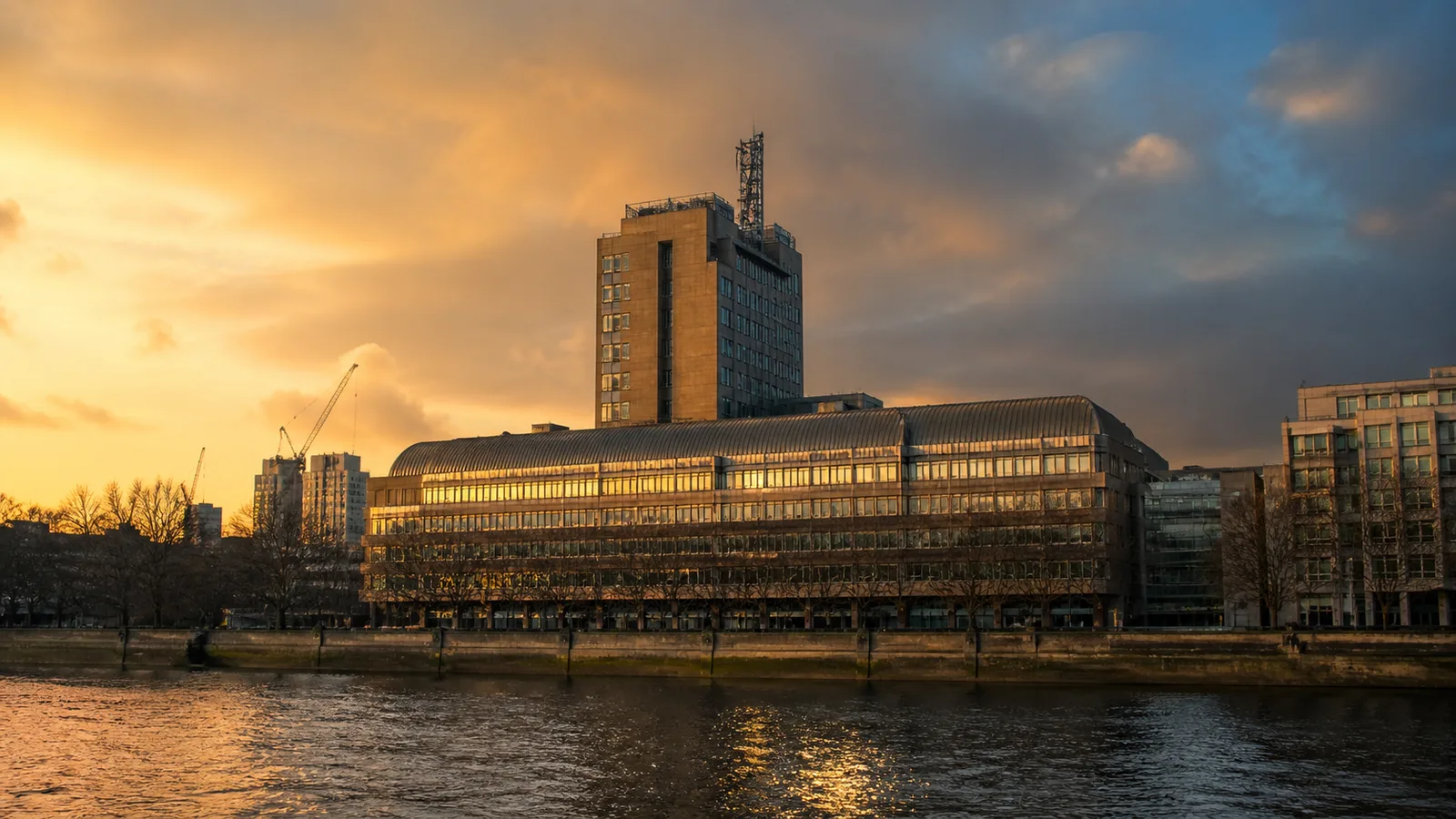
Late on Friday, May 1, the 84th session of the IMO's Marine Environment Protection Committee closed in London. After a week of intense negotiations and a coordinated push by the United States to derail the entire process, the IMO Net-Zero Framework — the first global carbon pricing scheme ever proposed for an entire industry — emerged intact. It was not adopted. But it survived. And for shipping, that survival changes the calculus for every voyage planned from 2026 onward.
MEPC 84 was never just a technical meeting. It was a political checkpoint. Last October, the framework was nearly killed by a 57-49 vote forced by Saudi Arabia and backed aggressively by Washington. The October session adjourned without adoption. The shipping industry walked into MEPC 84 expecting either a breakthrough or a collapse. What it got was something narrower but more durable — a regulatory survival that keeps global carbon pricing on the agenda for a December 2026 adoption vote.
The Headline: Net-Zero Framework Stays Alive
Closing the session, IMO Secretary-General Arsenio Dominguez said talks were "back on track" while warning that rebuilding trust among member states remained essential, and pointed delegations toward intersessional work as the route to convergence. That careful framing matters. The Net-Zero Framework was not adopted at MEPC 84 — formal adoption now falls to the resumed Extraordinary Session on 4 December 2026, immediately after MEPC 85. But the alternative path the United States pushed for, a wholesale reopening of the framework or a pivot to weaker voluntary measures, was rejected. The framework remains the sole agreed basis for continued negotiations.
For voyage planners, the practical implication is this: a global carbon price on bunker fuels is no longer a distant possibility. It is a regulatory framework with a defined adoption window and a trajectory toward enforcement. Operators who treated EU ETS as a regional anomaly now need to plan as if a global equivalent is coming.
What the Net-Zero Framework Actually Does
The framework introduces two enforcement mechanisms, working together. The first is a Global Fuel Standard — a GHG Fuel Intensity (GFI) target that tightens every year. Each ship over 5,000 GT must keep its annual emissions intensity below the limit, measured in grams of CO₂-equivalent per megajoule of energy used. The second is a carbon pricing mechanism — ships exceeding the limit pay for Remedial Units, with penalties of $100/tonne for moderate non-compliance and $380/tonne for severe non-compliance, in the 2028 to 2030 phase-in window.
Revenues from non-compliance penalties feed an IMO Net-Zero Fund — projected at $10-12 billion annually if the framework operates at full strength. Those revenues are intended to reward zero and near-zero emission fuels and support a just transition for developing maritime nations. Ships that beat the GFI target generate Surplus Units, which they can sell to over-emitters. In essence, the framework creates a cap-and-trade system for global shipping carbon, layered on top of existing EU regulations rather than replacing them.
The New Northeast Atlantic ECA
While the carbon debate dominated headlines, MEPC 84 delivered concrete regulatory action that operators need to plan for now. The committee approved a new Emission Control Area (ECA) covering the Northeast Atlantic, tightening limits on sulphur oxides, nitrogen oxides, and particulate matter across a wide swath of European waters beginning in 2028.
The boundary is wider than the name suggests. The ECA covers the exclusive economic zones and territorial seas, out to 200 nautical miles from baselines, of Greenland, Iceland, the Faroe Islands, Ireland, the United Kingdom mainland, France, Spain and Portugal. Inside it, ships must burn fuel at or below 0.10 percent sulphur, and the NOx and particulate limits apply alongside. The amendments enter into force on 1 September 2027 and the requirements take effect twelve months after that. A vessel running Rotterdam to Gibraltar will be inside the zone for most of the passage.
For voyage planners, this is the most immediately actionable outcome of MEPC 84. Vessels transiting between Northern Europe and the Mediterranean, or between Northern Europe and the Americas, will need to burn low-sulphur fuel within the new ECA boundary or operate compliant scrubber systems. What that costs depends entirely on the VLSFO–MGO spread, and that spread has moved a long way since this article was written. In late May, Rotterdam MGO traded around $210 above VLSFO. By early August the gap had widened past $600 — the distillate squeeze that followed the Hormuz closure pushed MGO up while residual fuel eased. Anyone who modelled ECA compliance on spring numbers is working with a figure less than half the current one. Live spreads across 45 ports are on our Data Hub.
By 2028, a single tonne of bunker on a European voyage may carry $1,300+ in combined fuel and compliance cost.
The ECA layer scales directly with the MGO–VLSFO spread and is the most volatile line here. It has more than tripled since May. The EU ETS layer moves with the allowance price. Only the IMO Net-Zero figure is fixed, and only because the framework has not been adopted.
Other Concrete Outcomes from MEPC 84
Beyond the headline carbon debate, MEPC 84 delivered a stack of regulatory updates that voyage planners and compliance teams need to track:
Plastic waste from ships: A new strategy targeting zero plastic waste discharges from ships by 2030 was adopted, alongside advancing work on a global code for transporting plastic pellets — a direct response to several recent container loss incidents that released billions of plastic nurdles into the ocean.
Hormuz resolution: The IMO adopted a resolution condemning attacks on commercial shipping in the Strait of Hormuz, warning of heightened risks of large-scale marine pollution tied to ongoing hostilities. While symbolic, the resolution adds international pressure for de-escalation and provides legal grounding for future insurance and salvage claims.
Ballast water and underwater noise: The committee advanced amendments to strengthen ballast water management rules and address underwater noise pollution from shipping — areas with growing biodiversity impact concerns.
Methane and nitrous oxide measurement: Draft guidelines for testing methane and nitrous oxide emissions from marine engines were progressed. This matters because both gases will be factored into EU ETS calculations from 2026, and any future IMO carbon pricing will need standardized measurement protocols.
What Else Came Out of MEPC 84
The carbon debate took the headlines, but the session closed a good deal of other business. Several items carry dates that matter more than the framework does in the near term.
- Intersessional working group. The committee established a working group to resolve outstanding concerns on the framework ahead of MEPC 85, with two meetings scheduled — one in early September, one in late November — plus a one-day session on chain-of-custody certification for tracking fuel origin through the supply chain. This is where the December vote is actually decided.
- Ballast Water Management. Amendments to the BWM Convention were approved, strengthening survey requirements and system operation and maintenance obligations. The non-penalisation approach ends when the amendments enter into force in 2028.
- Biofouling. The committee agreed that a standalone, legally binding instrument should be developed by 2029, moving beyond the current voluntary guidelines. For owners, that turns hull cleaning from a fuel-efficiency choice into a future compliance obligation.
- Plastic pellets. A mandatory code for the carriage of plastic pellets by sea will be developed, following several high-profile spill incidents.
- Methane and nitrous oxide. New 2026 guidelines were adopted for measuring CH₄ and N₂O emissions both on test beds and onboard — the measurement groundwork any carbon pricing scheme depends on.
- Underwater radiated noise and marine plastic litter. Updated measures on the first, and a 2026 Strategy and Action Plan on the second.
The biofouling decision is worth watching. A legally binding instrument by 2029 would put hull condition on the same footing as ballast water — surveyed, certified, and enforceable at port state control rather than left to commercial judgement about fuel savings.
The US Position and Why It Matters
Washington came to MEPC 84 with one objective: weaken or delay the Net-Zero Framework. Federal Maritime Commission Chair Laura DiBella framed the framework as "an unjustified levy on US shippers and international vessels," arguing the costs would flow through to American consumers. The US pressed delegations to consider alternatives. The push largely failed — the framework survived as the sole agreed basis for negotiation — but it succeeded in slowing momentum and forcing technical concessions.
The political math going into December 2026 is now more complex. China, which switched from supporting the framework in April 2025 to backing the October 2025 delay, remains uncommitted. Greece and Cyprus — major flag states — abstained in October. Major shipping nations like Singapore and Liberia have raised concerns about clean fuel supply scaling. Adoption requires a two-thirds majority of the 108 MARPOL Annex VI parties.
The framework can pass. But it is not guaranteed. And operators planning vessel investments, charter contracts, and fuel strategy through 2030 need to model both outcomes.
What This Means for Voyage Planning
The practical implications for operators fall into three time horizons.
Now through 2027 — manage layered EU costs. EU ETS is at 100% compliance. FuelEU Maritime is in force. The combined burden on EU-touching voyages already exceeds $300/mt of fuel burned in compliance costs alone. Voyage estimates that ignore these layers are systematically wrong by tens of thousands of dollars on round-trip basis. Track real-time bunker prices and compliance costs on the Fairway ETA Data Hub, and model fuel-optimized voyages with automatic ECA detection on the Voyage Calculator.
2028 — prepare for the new ECA and possible IMO carbon price. The Northeast Atlantic ECA is now a fixed certainty. Vessels operating in that region need fuel switching plans, scrubber feasibility studies, or route adjustments built into their 2027 budgets. If the IMO Net-Zero Framework is adopted in December 2026, 2028 emissions will be subject to global carbon pricing on top of regional EU rules — a doubled compliance burden for European trades.
2030 and beyond — fundamental fleet decisions. The cumulative compliance burden of EU ETS, FuelEU Maritime, regional ECAs, and a potential IMO Net-Zero Framework reshapes vessel newbuild economics. Dual-fuel ammonia, methanol, and LNG vessels start to compete on lifetime cost. Conventional VLSFO-burning vessels face structural disadvantage on European trades. Charter rate negotiations from 2026 onward will increasingly bake in compliance differentials.
The Bottom Line
MEPC 84 was not a breakthrough. The Net-Zero Framework was not adopted. But the alternative — a US-led collapse of multilateral climate negotiation for shipping — did not happen either. The framework survived, the timeline tightened to December 2026, and the regulatory direction of travel is now clearer than at any point since the original 2023 GHG strategy.
For voyage planners, the message is straightforward: the era of treating fuel as just fuel is ending. Every tonne of bunker burned on a European voyage in 2026 carries hundreds of dollars in regulatory cost. Every voyage planned for 2028 onward needs to model a new ECA. Every fleet decision through 2030 needs to weight a possible global carbon price.
The ships that win in 2026 are not necessarily the fastest or the largest. They are the ones whose operators model total voyage cost — fuel, carbon, time, and regulatory risk — as a single integrated decision. The data exists. The framework is taking shape. The question is whether your planning will catch up before the rules do.
Track real-time bunker prices, EU ETS compliance costs, and ECA boundaries on the Fairway ETA Data Hub. Model voyages with automatic SECA detection and carbon cost estimation on the Voyage Calculator.
Sources
- International Maritime Organization — MEPC 84 session summary, 1 May 2026