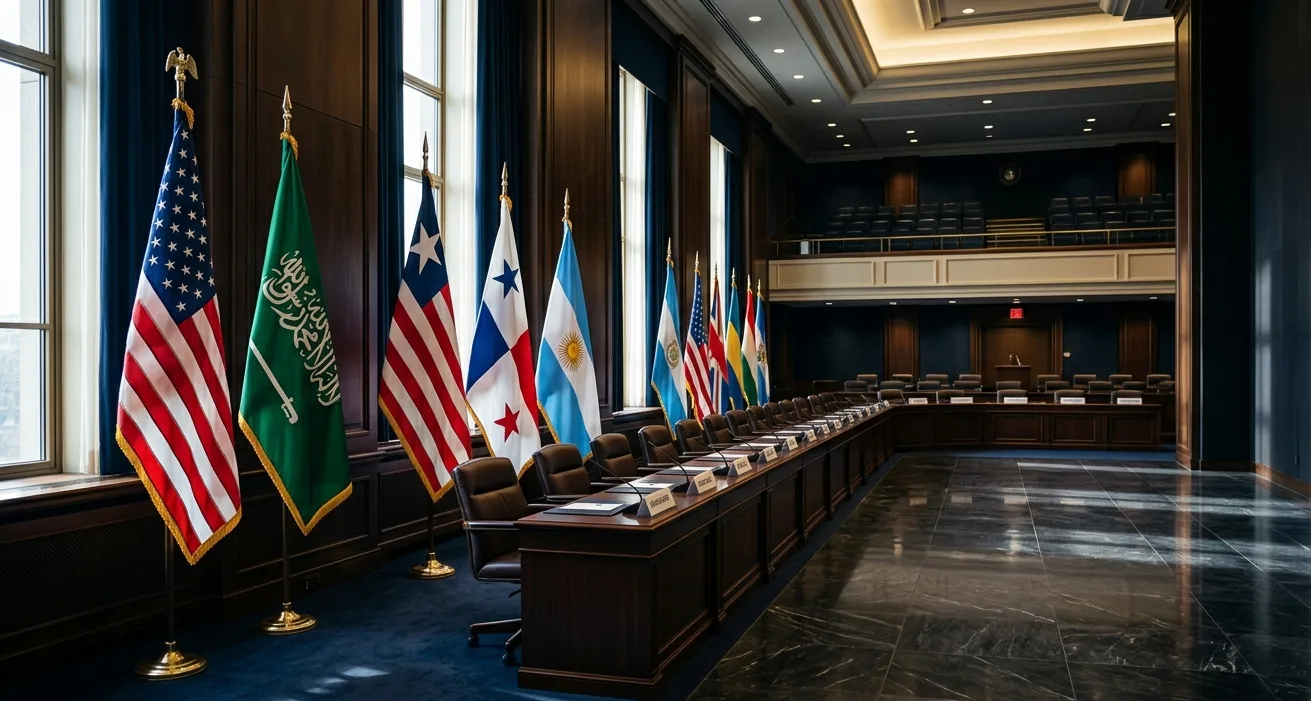
On May 2, 2026, the United States Department of State issued a one-page statement that may end up reshaping global shipping more than any single regulation in a generation. Washington formally withdrew its support for the IMO Net-Zero Framework, the world's first attempt at a binding industry-wide carbon price. Standing alongside the US: Saudi Arabia, Liberia, Panama, and Argentina.
That coalition matters. Liberia and Panama are the world's two largest flag registries. Saudi Arabia is the world's largest crude oil exporter. The United States is the world's largest economy. Together with Argentina, they represent more than 30 percent of global shipping tonnage. Combine that with the UAE's exit from OPEC just four days earlier, and what we are watching is not a single policy fight — it is the breakdown of multilateralism in maritime governance, replayed across both energy and climate fronts in less than a week.
The Four Days That Changed Maritime Climate Politics
Step back and look at the timeline. The pace tells the story:
Each of these events on its own is significant. Taken together — UAE breaking from OPEC discipline, the framework surviving but barely, the US formalizing a competing coalition — they describe a maritime world where the assumption of coordinated global action no longer holds. Operators planning fleet decisions through 2030 are now navigating without the regulatory roadmap most strategy decks were built on.
The Coalition Nobody Saw Coming
Look at the five countries that just stood together at MEPC 84 against the world's first global shipping carbon tax. The geography alone tells you something is shifting in maritime governance.
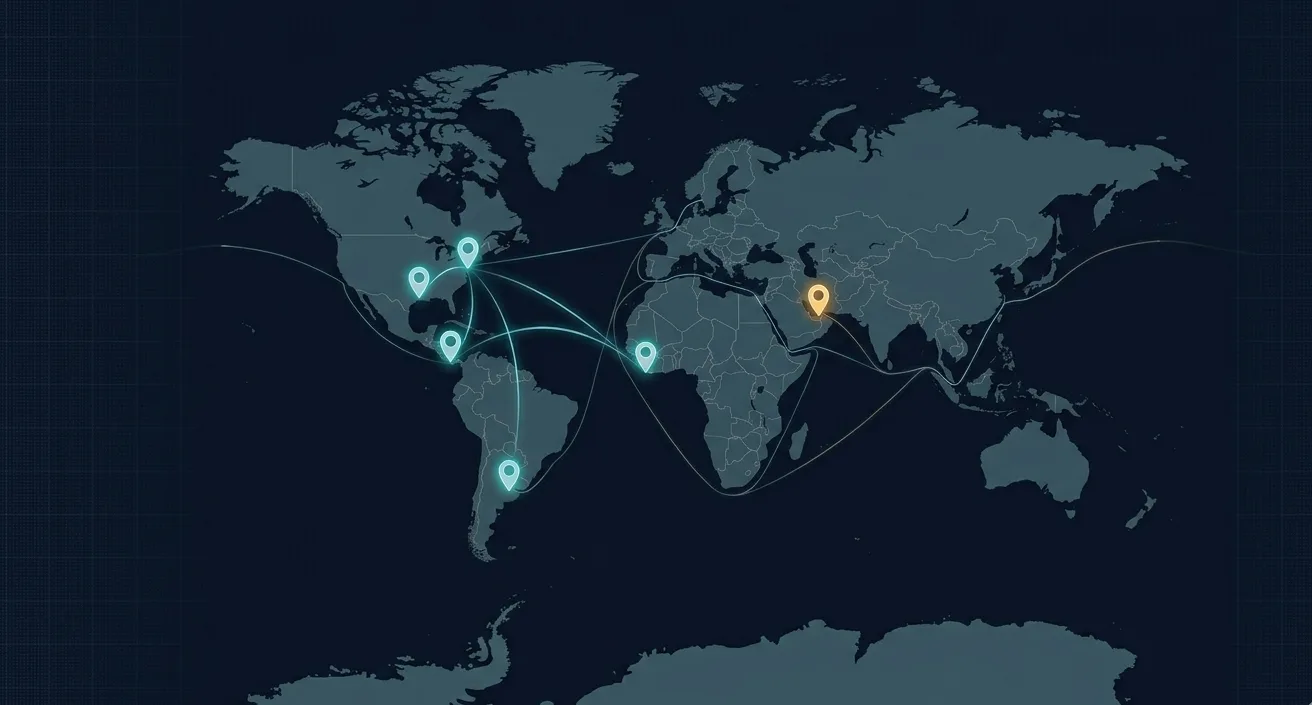
On paper, this is an unusual grouping. A G7 economy. A Gulf petrostate. The world's top two open registries. A South American agricultural exporter. What unites them is not ideology but a shared resistance to ceding regulatory authority to a multilateral framework that imposes costs on their respective stakeholders.
US Federal Maritime Commission Chair Laura DiBella framed the framework as "an unjustified levy on US shippers and international vessels." The State Department called it "fundamentally flawed." Saudi Arabia has consistently argued that the framework disproportionately harms hydrocarbon exporters. Liberia and Panama, whose economies depend heavily on ship registration revenues, fear that high-compliance vessel owners will reflag elsewhere. Argentina's position is anchored in protecting agricultural export competitiveness.
| Country | Strategic Stake | Share of Global Tonnage | Position |
|---|---|---|---|
| Liberia | Largest open registry | ~14% | Opposing NZF |
| Panama | Second largest open registry | ~13% | Opposing NZF |
| United States | Largest economy, energy producer | ~3% | Officially withdrawn |
| Saudi Arabia | Largest crude exporter | ~1% | Opposing NZF |
| Argentina | Major agri exporter | <1% | Opposing NZF |
The Flag State Arbitrage Question
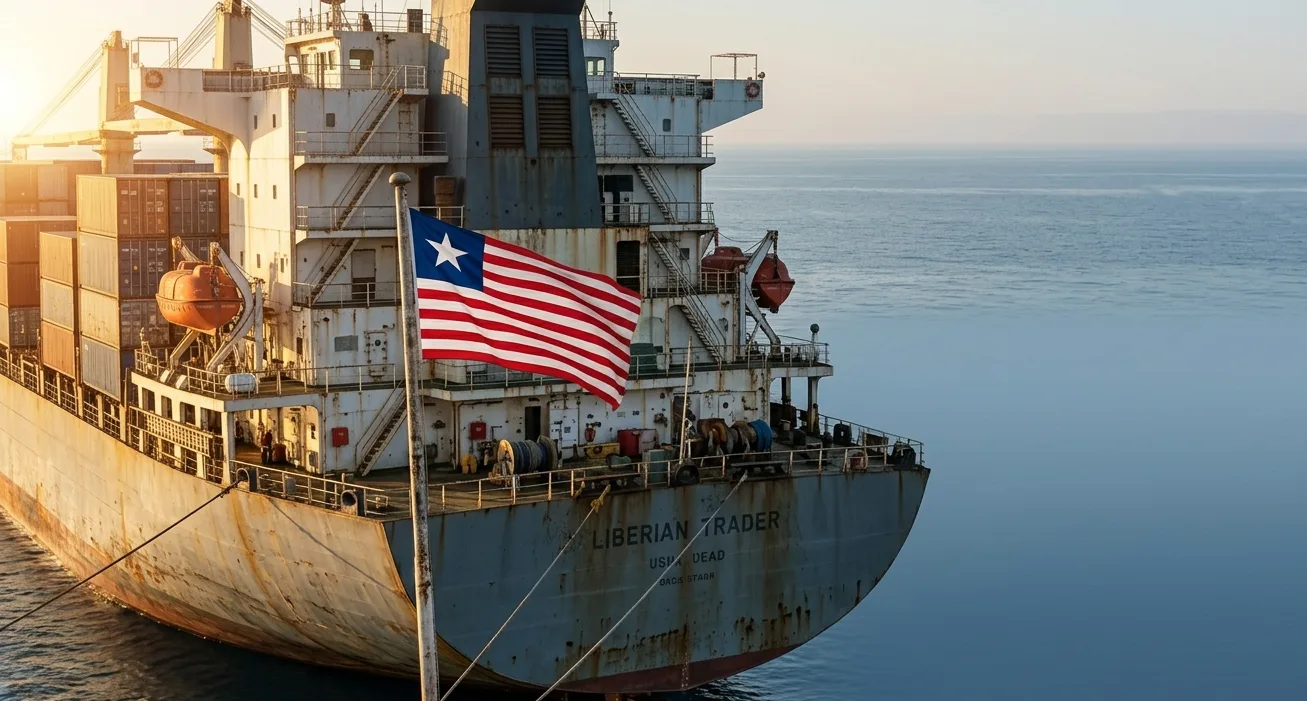
Here is the question quietly being asked in chartering desks from Athens to Singapore: if the IMO Net-Zero Framework eventually passes, will it apply equally to vessels under flags whose host states have formally opposed it?
The technical answer under MARPOL is yes — the framework binds all parties to MARPOL Annex VI, which includes Liberia and Panama. But enforcement happens through flag state administrations and port state control. A flag state that openly opposed the framework may be less rigorous in enforcement. Port states retain rights to inspect, but the practical asymmetry creates room for what insurers and brokers are already calling "flag state arbitrage" — the strategic choice of registry based on regulatory exposure.
Liberia and Panama between them register roughly 27 percent of global tonnage. If even a fraction of that tonnage moves to take advantage of softer enforcement, the financial integrity of the Net-Zero Fund collapses. That fund was projected to generate 10 to 12 billion dollars annually. A 30 percent shortfall meaningfully changes its capacity to support clean fuel adoption and developing-nation transition.
Five Frameworks, Five Futures
The MEPC 84 working group is now studying alternative proposals from Japan, Panama, Argentina, Liberia, and the United States. None of these has been finalized, but each represents a distinct theory of how shipping's climate transition should work:
| Proposal | Core Mechanism | Cost Burden | Adoption Likelihood |
|---|---|---|---|
| IMO NZF (Original) | Mandatory GFI + carbon levy | High, $100-380/t CO2 | Uncertain |
| Japan Alternative | Efficiency-based standards | Moderate, no direct levy | Industry-supported |
| Panama Alternative | Voluntary commitments | Low, opt-in | Weak from climate perspective |
| Argentina Alternative | Developing nation exemptions | Asymmetric | Politically attractive |
| Liberia Alternative | Gradual phase-in to 2050 | Lower near-term | Compromise candidate |
| US Position | National-level autonomy | Variable by jurisdiction | Implies fragmentation |
The challenge is that these five alternatives diverge in fundamental design philosophy, not just in numbers. Mandatory versus voluntary. Global versus national. Levy-based versus efficiency-based. A working group can refine details, but it cannot reconcile philosophical opposites. The December 2026 vote will likely come down to a binary: NZF as drafted, or some version of regulatory fragmentation.
EU vs IMO: The Showdown of 2027
Here is the strategic wildcard: even if the IMO framework collapses, the European Union has its own carbon pricing mechanism already in force. EU ETS reached 100 percent compliance for shipping in 2026. FuelEU Maritime adds a separate fuel intensity standard. The Northeast Atlantic ECA enters force in 2028.
If the IMO framework dies in October, the EU will not stand still. Brussels has signaled, repeatedly, that European unilateral action will accelerate if multilateralism fails. That likely means tightening EU ETS coverage, expanding scope to non-EU port pairs, or accelerating FuelEU intensity targets. The result is a regulatory bifurcation: vessels touching European ports face escalating costs, while vessels confined to other trade lanes face uncertainty but lower direct compliance burden.
For voyage planners modeling 2027 onward, this means the European premium becomes structural, not transitional. Real-time bunker pricing, EU ETS cost modeling, and SECA detection across all 45 reference ports are tracked daily on the Fairway ETA Data Hub.
What If NZF Dies in October
Three concrete consequences would follow framework rejection:
EU regulation accelerates. European unilateral action becomes the default global compliance benchmark. Shippers with European exposure pay more; shippers without it remain in regulatory limbo.
US considers domestic carbon pricing. A US Maritime Climate Act has been informally discussed in Washington since 2024. If the IMO framework fails, domestic legislation becomes more politically viable — particularly under future administrations.
ESG capital reprices. Green shipping bonds, sustainability-linked loans, and ESG fund flows would reprice based on a fragmented regulatory landscape. Fleet renewal economics for ammonia and methanol vessels deteriorate without a global price signal.
Three Strategic Postures for Shipowners
Given the bifurcated probability, owners are quietly adopting one of three postures:
Believer. Operating as if NZF passes in October. Investing in dual-fuel newbuilds, locking in green fuel offtake, paying the premium. Risk: stranded assets if framework fails.
Skeptic. Operating as if NZF fails. Extending lifespan of conventional vessels, deferring fleet decisions, optimizing for current regulations only. Risk: rapid catch-up costs if framework passes.
Hedger. Building optionality into fleet structure — flexible charters, modular fuel switching, dual-flag exposure. Higher operational complexity, lower binary risk. The dominant posture among the largest container lines and tanker pools as of mid-2026.
The Investor Angle
Equity analysts are now modeling a wider variance of 2028 EBITDA outcomes for listed shipping names than at any point since the pandemic. The reason is regulatory uncertainty cascading into capital allocation. ESG funds that previously overweighted shipowners committed to green fleet renewal face their own dilemma: commit further on faith, or wait for regulatory clarity.
Watch three signals through Q3 2026: ammonia and methanol newbuild order book growth, EU ETS allowance auction prices, and the US legislative calendar for any maritime climate bill introduction. These three indicators together will tell you which scenario is pricing in.
What Voyage Planners Should Do Now
Concrete actions across roles:
For brokers and charterers: Build flag state into your charter terms negotiation. Owners under coalition flags may demand premium rates or refuse certain trades if European port states tighten enforcement.
For voyage planners: Continue modeling EU ETS at full cost. Do not assume IMO framework offsets European costs — even in the best case, the IMO would layer on top, not replace.
For ship operators: Maintain optionality on flag and on fuel. The question is no longer just "what fuel will I burn in 2028?" but "under whose flag, at what cost, in which jurisdiction?"
For investors and lenders: Price the binary. NZF passes in October or it does not. Both outcomes are now plausible. Position accordingly.
For port and terminal operators: Prepare for differentiated berthing protocols if European ports begin discriminating against high-emission vessels. The legal framework may not yet exist, but the political pressure does.
The Bigger Picture: Multilateralism Under Strain
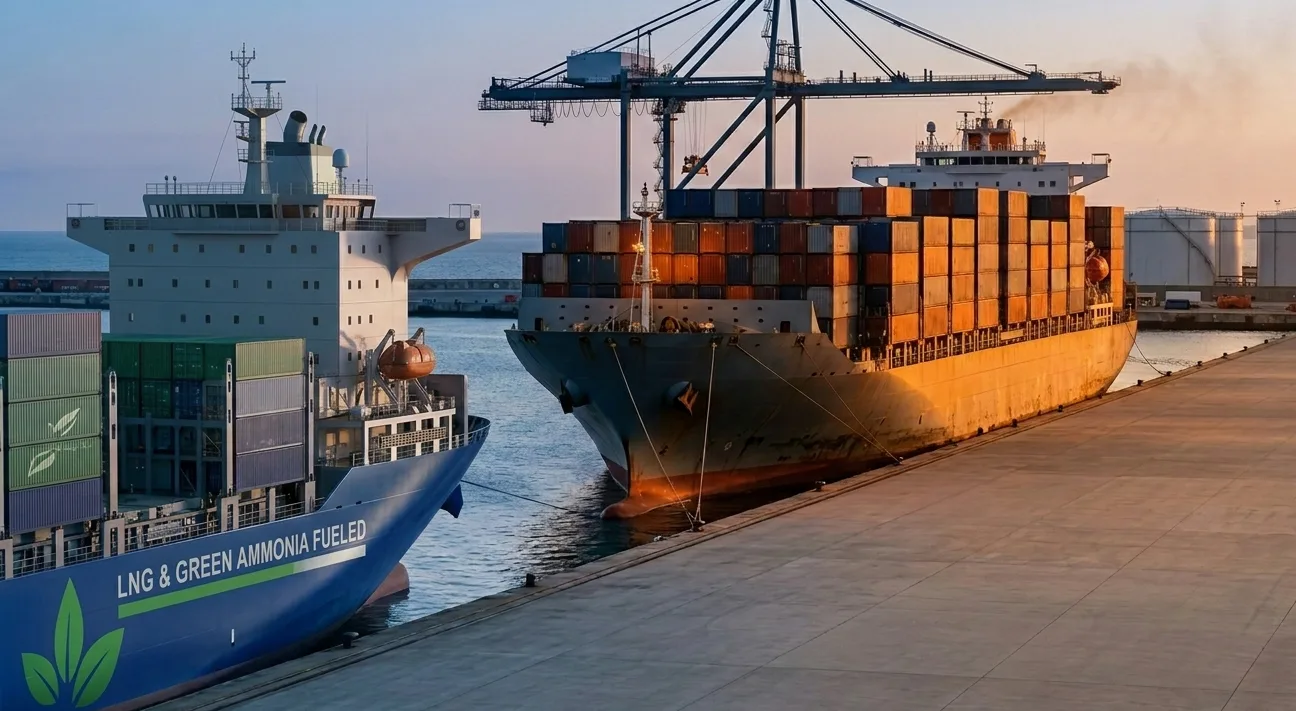
Connect the dots back four days. The UAE leaves OPEC because Saudi-led discipline no longer fits its growth ambitions. The IMO framework barely survives because national interests no longer align around climate cost-sharing. The US formalizes opposition because America First has reached maritime governance.
These are not isolated events. They describe the same trend: the global institutions that have governed energy and shipping since the 1970s — OPEC, IMO, MARPOL frameworks — are increasingly fragmenting along national interest lines. For shipping, an industry built on global trade and global rules, that fragmentation is not just a policy concern. It is an operating environment.
The 2020s started as a decade of energy transition. By the middle of the decade, it looks more like an era of energy reordering and climate-policy competition. The shipping industry sits squarely in the middle. Operators who treat regulatory volatility as a permanent feature, not a temporary phase, will be the ones still in business in 2030.
Track real-time bunker prices across 45 ports, EU ETS compliance costs, BDI movements, and regulatory zone boundaries on the Fairway ETA Data Hub. Calculate fuel-optimized voyages with automatic SECA detection and multi-scenario carbon cost modeling on the Voyage Calculator.