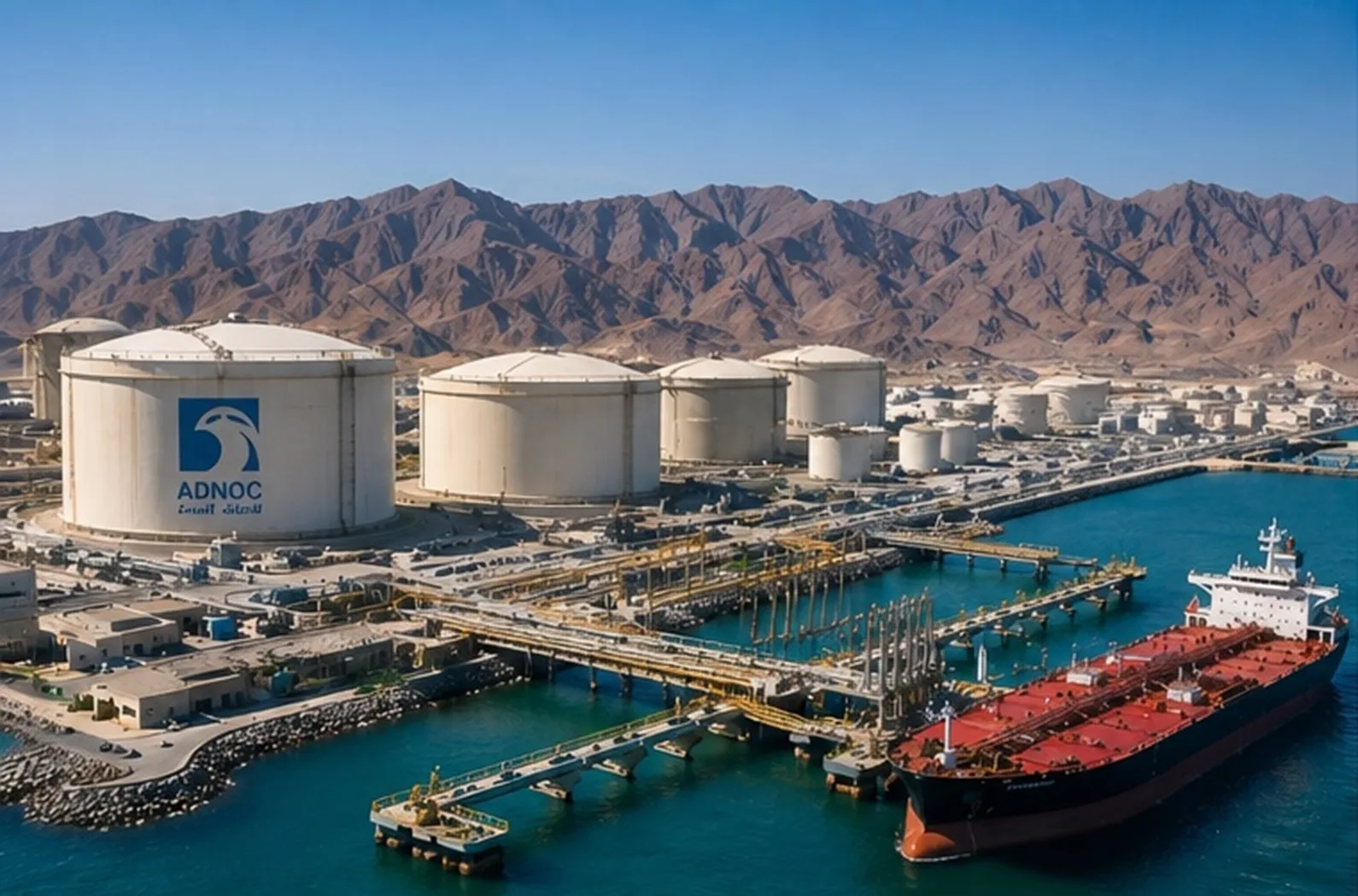
On April 28, 2026, the United Arab Emirates announced it would leave OPEC and OPEC+ effective May 1. After 59 years of membership, the third-largest producer in the cartel is going independent — and the timing, in the middle of an active Hormuz crisis, has shipping desks from Athens to Singapore tearing up their 2026 strategies.
This isn't just an oil cartel story. It's a tanker story, a chartering story, a bunker story, and a shipbuilding story all at once. Here's what it means for everyone with skin in the maritime game.
The Announcement That Shocked Vienna
OPEC, headquartered in Vienna, will lose one of its most influential members in three days. The energy ministry framed the decision around the country's long-term economic strategy and its changing energy profile, and said the UAE would continue to act as a responsible producer. The plainer reading is that Abu Dhabi wants to pump to its own schedule rather than to a Saudi-led quota.
The market reaction tells the story. OPEC's collective production share drops below 30% of global supply, down from more than half in the 1970s. The UAE's departure doesn't end OPEC's relevance, but it confirms a shift toward a more fragmented, multipolar oil market.
Why UAE Left — Three Years of Frustration
The exit didn't happen overnight. The UAE has invested tens of billions of dollars in expanding capacity toward 5 million barrels per day, against sustainable capacity of roughly 4.3 million and Hormuz-constrained output well below that. Meanwhile, OPEC quotas have forced it to leave roughly 1.8 million bpd of capacity idle.
Add to that the frustration of watching Iraq and Russia routinely exceed their own quotas while the UAE complied. Then came the Hormuz crisis — Iran's effective blockade of the strait constrained UAE exports to a trickle, threatening the foundation of the country's economy. The UAE didn't cite the war as the reason for leaving, but the timing speaks for itself.
The reading across the market was straightforward enough. Freed from quota discipline, the UAE would behave like any non-OPEC producer and pump to capacity once the strait allowed it. Analysts differed on the timing rather than the direction.
| Country | Production (mb/d) | Spare Capacity | Status |
|---|---|---|---|
| Saudi Arabia | 9.5 | 3.0 | OPEC Lead |
| UAE | 2.4 | 1.9 | EXIT May 1, 2026 |
| Iraq | 4.2 | 0.5 | OPEC |
| Kuwait | 2.7 | 0.4 | OPEC |
| Iran | 3.0 | 0.3 | OPEC (sanctioned) |
Tanker Market: The Counter-Intuitive Boom
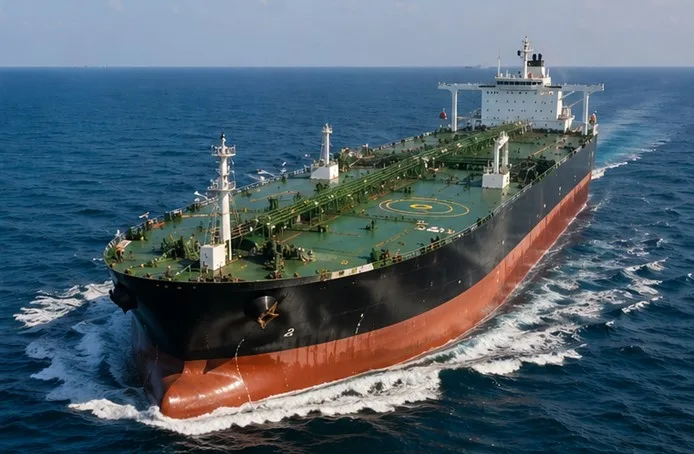
Here's what most casual observers miss: a fragmented oil market is good for tanker owners. When OPEC discipline weakens, individual countries pump more, often to non-traditional destinations. That means longer voyage distances, more ton-miles, and stronger charter rates.
The numbers from Q1 2026 already tell that story. VLCC charter rates moved from Worldscale 55 in January to WS 280 by late April — a five-fold increase. Some of that is the Hormuz crisis. But the UAE exit, by signaling more aggressive future production, locks in the bullish thesis for the rest of the year and beyond.
Segment-by-Segment Impact
Not all tanker classes benefit equally. Here's how the post-UAE-exit landscape looks across crude and product segments:
| Segment | Pre-Exit Outlook | Post-Exit Outlook | Why |
|---|---|---|---|
| VLCC | Strong | Stronger | UAE → Asia long-haul demand expansion |
| Suezmax | Moderate | Strong | Cape rerouting persists, more West African flows |
| Aframax | Strong | Moderate | Shorter-haul Mediterranean trades disrupted |
| LR2 (Clean) | Strong | Strong | Regional product flows continue to shift |
Shipbuilders Are the Quiet Winners
Tanker newbuild orders in Q1 2026 saw a 21-fold increase year-over-year for VLCCs. The orderbook has filled rapidly across both Chinese and Korean yards, and prices are firming up.
Owners from Athens, Oslo, Geneva, Singapore and Houston have all moved to lock in tonnage, and Greek owners account for a notable share of recent VLCC contracting. The pattern extends beyond traditional tanker operators.
| Yard | Country | Q1 2026 VLCC Orders |
|---|---|---|
| Hengli Heavy | China | 38+ |
| Hanwha Ocean | Korea | 10 |
| HD KSOE | Korea | 8 |
| Samsung Heavy | Korea | 6 |
Order counts as reported in Q1 2026 trade coverage. Newbuilding price benchmarks are on our Data Hub.
For shipowners watching this from any major port, the orderbook is telling you something: the smart money is positioning for sustained tanker demand through 2029. Delivery slots are scarce, and prices are firming.
The Bunker Market Wildcard
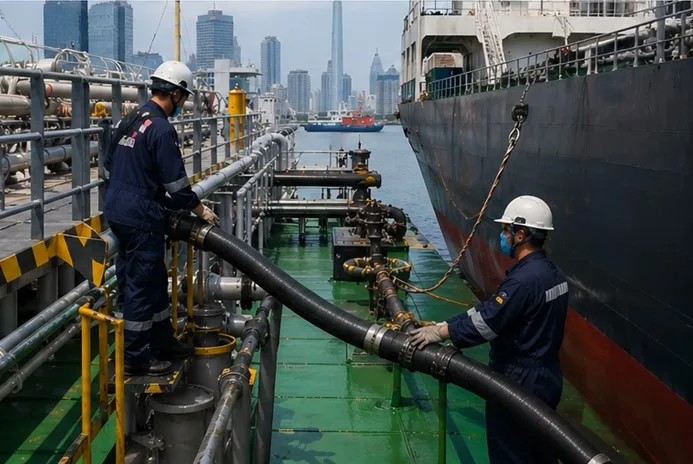
Fujairah is the world's third-largest bunkering hub. UAE's exit removes it from OPEC's coordinated framework but doesn't change its physical infrastructure. What it does change is the country's freedom to expand refining and bunker storage aggressively without OPEC compliance pressure.
The Singapore–Fujairah spread is worth watching, and it does not always move the way intuition suggests. Fujairah traded above Singapore in mid-July; two weeks later it sat close to thirty dollars below. A discount at the port nearest the disruption is worth pausing over rather than assuming a stress premium that is not there. The UAE's exit could either steady Fujairah supply, if refining expands without quota pressure, or loosen it further. Both ports are updated weekly on our Data Hub.
Real-time bunker pricing across 45 ports is available on the Fairway ETA Data Hub, with VLSFO, MGO, and HSFO trends updated daily.
Charterer's Calculus: Three Scenarios, and Which One Happened
Written at the end of April, this was how a chartering desk faced the following ninety days. That window closed on 29 July.
Scenario A — Hormuz reopens within 30 days. UAE's exit becomes immediately material. Additional barrels start flowing. VLCC rates may soften slightly from peak but stay elevated. Long-haul demand resumes from Gulf to Asia.
Scenario B — Hormuz remains closed 60–90 days. UAE's spare capacity is irrelevant in the short term. Cape rerouting continues. Tanker rates stay strong on disruption alone. UAE exit becomes a forward-looking story.
Scenario C — Hormuz closure extends 6+ months. Demand destruction sets in. Refinery runs collapse. Bunker prices peak then retreat as global demand falls. UAE's exit becomes a 2027 story, not a 2026 one. Owners with locked-in 2027–28 charter coverage benefit most.
Scenario C is what happened. The strait has not reopened. As of early August the crisis is in its sixth month, transit volumes remain a fraction of normal, and the UAE's spare capacity is still largely stranded behind it. The forward-looking parts of this article should be read against that outcome.
The Geopolitical Domino: Who's Next?
UAE's departure raises the obvious question: who follows? Analysts are watching three potential candidates — Iraq, which has consistently exceeded quotas; Nigeria, where compliance has been weak; and Venezuela, whose production trajectory is constrained by sanctions, not OPEC.
Other members moved quickly to signal continuity. Russia confirmed it would remain within OPEC+, and Algeria reaffirmed its commitment to the group. The cartel is not dissolving, but its centre of gravity is shifting.
What Voyage Planners Should Do Now
Practical takeaways across roles:
For brokers and charterers: Reassess VLCC hedging strategies. Time charter coverage at current rates may look expensive, but spot exposure carries massive volatility risk through year-end.
For voyage planners: Default to Cape route for Asia–Europe. Don't model Suez return until at least Q4 2026. Add 8–12 days to any Gulf-origin voyage planning.
For ship operators: If you don't have 2027–29 newbuild slots reserved, the window is closing fast. Yard pricing is moving up.
For commodity traders: Monitor Asian premium spreads weekly. Singapore–Rotterdam crack divergence is the cleanest indicator of supply tightness.
For superintendents and crew managers: Verify war-risk insurance renewals carefully. Hormuz and Red Sea exclusions vary by underwriter — don't assume coverage carries forward unchanged.
The Bigger Picture
OPEC's market share now sits below 30%. What replaces it isn't a single coordinated cartel — it's a fragmented Gulf, an aggressive U.S. shale, and a Russia trying to hold its own bloc together. For shipping, that means more volatility, more long-haul, more demand for tonnage, and more pressure on bunker markets.
The 2020s started as a decade of energy transition. The middle of the decade looks more like an energy reordering. The shipping industry — tankers, dry bulk, container, even gas carriers — sits squarely in the middle of every flow that this reordering creates.
Plan accordingly.
Track real-time bunker prices, BDI movements, currency rates, and crude oil benchmarks on the Fairway ETA Data Hub. Calculate fuel-optimized voyages with automatic SECA detection and EU ETS cost modeling on the Voyage Calculator.