Every day, energy headlines quote the same number: Brent crude, $104.97. It shows up on Bloomberg, on the morning news, in the analyst notes your broker forwards. When Brent moves, fuel prices move, airline tickets move, fertilizer moves. It is the most-cited oil price in the world.
Here is the strange part. The “Brent” in those headlines isn't really Brent.
Let's see why that matters.
What people think Brent is
Ask anyone what Brent crude is, and the answer usually runs along these lines: “A type of oil from the North Sea. The benchmark for global oil prices.”
Textbook answer. Also half wrong.
Brent was a specific oil — a grade pumped from the Brent oilfield, discovered in 1971 between Scotland and Norway. At its peak in the mid-1980s, the Brent field produced roughly 500,000 barrels a day. Light, sweet, easy to refine, and shipped from the convenient Sullom Voe terminal in the Shetland Islands. Plentiful, consistent, accessible — which is exactly why traders started using it as a benchmark in the first place.
Now the twist. The Brent field is essentially dead.
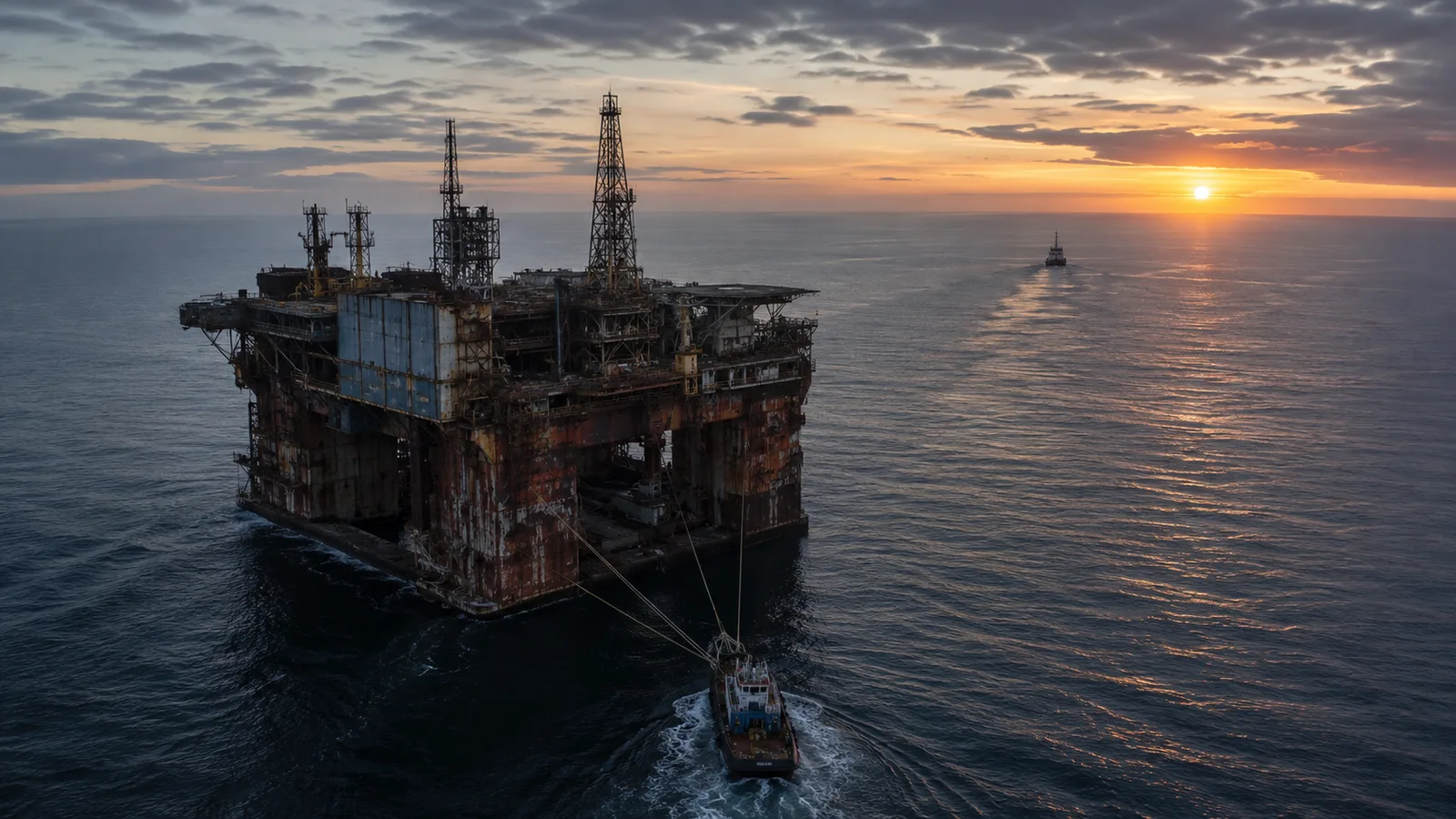
Production peaked decades ago. By the early 2020s, the original Brent platforms were being decommissioned and towed away. Today, the actual Brent oilfield produces only a few thousand barrels a day — possibly less. The rigs that put Brent on the map are being scrapped at sea.
And yet “Brent” is still the number you see every morning. Decades of contracts, futures markets, and trading infrastructure were already wired into the Brent name by the time the field began to decline — renaming the benchmark would have broken too much.
So how does an almost-empty oilfield end up anchoring the price of roughly two-thirds of internationally traded crude?
The trick: it isn't one oil. It's five.
When the Brent field began to decline, the benchmark didn't die — it expanded. Pricing agencies like Platts kept the name “Brent” while quietly redefining what it meant.
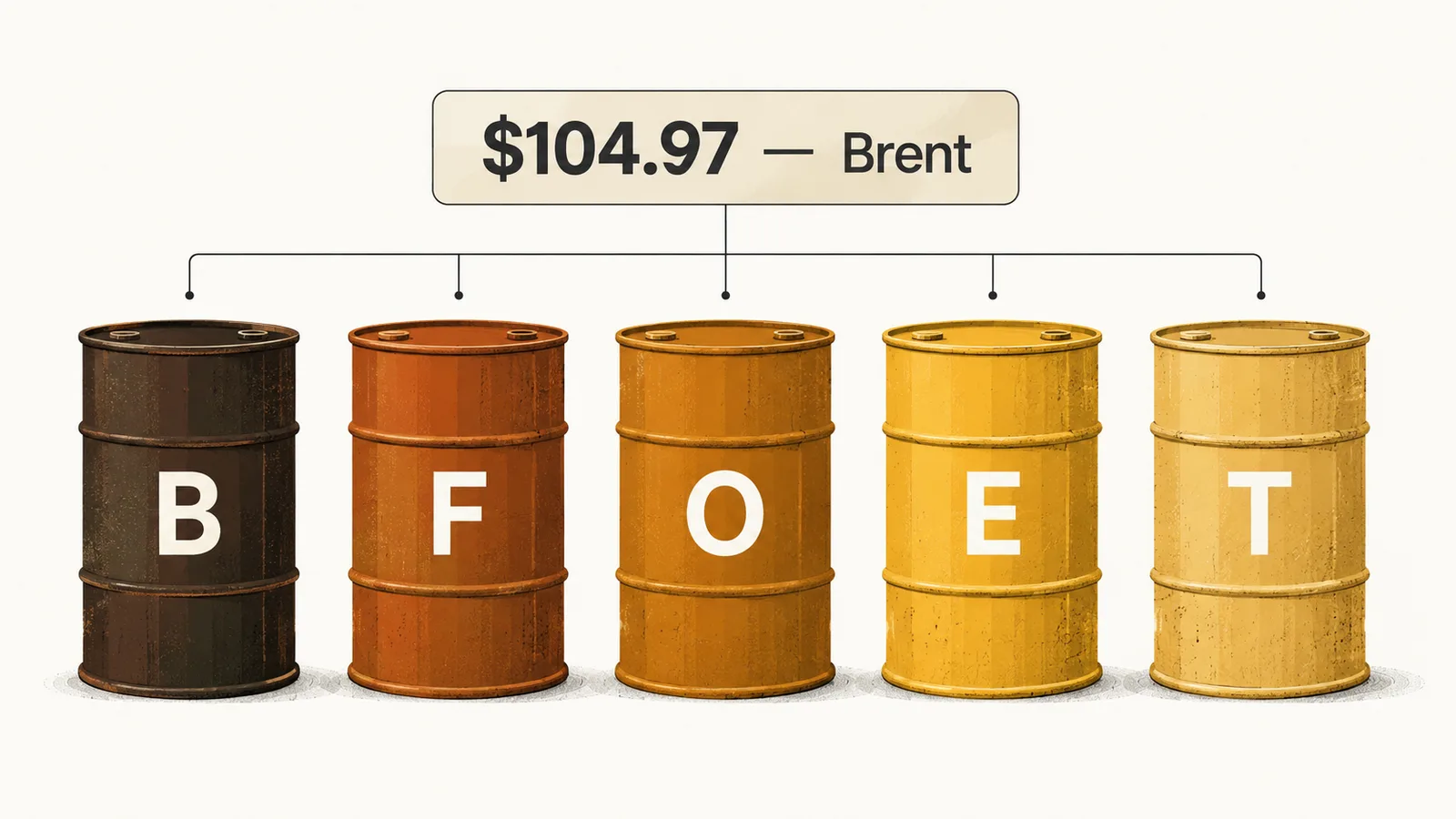
Today, when a trader quotes “Brent,” they aren't quoting one field. They are quoting whichever grade is cheapest on the day out of five North Sea grades:
- Brent (mostly historic now)
- Forties
- Oseberg
- Ekofisk
- Troll
Inside the industry this is written as BFOET. That's the actual basket the published “Brent” price comes from.
Think of it like a famous restaurant known for one signature dish. The dish becomes so popular that the restaurant's name becomes shorthand for that style of cooking. Over the years the original dish stops being made — but the name keeps getting attached to an evolving menu of similar dishes. Customers keep ordering “the famous thing,” and what arrives at the table keeps quietly changing.
That's Brent. The name stayed. The contents kept shifting. At some point, “Brent” stopped being a place and started being more like a brand label.
Why this matters (more than it sounds)
This isn't trivia. The way Brent is defined shapes the prices real people actually pay.
Shipping. Most marine fuels — VLSFO, HSFO, MGO — are priced with Brent as a major input. When the BFOET basket moves, bunker prices in Singapore, Rotterdam, and Fujairah usually follow within hours.
Air travel. Jet fuel runs 20–30% of an airline's operating cost. A $10 jump in Brent shows up in ticket pricing on the next revenue cycle.
Food. Fertilizer is made from natural gas, and natural gas tends to track Brent through energy-substitution effects. Higher Brent eventually finds its way into grocery prices — typically with a three-to-six-month lag.
The other benchmarks. Brent isn't the only one — WTI prices much of the U.S. market, Dubai prices much of the Middle East. Most of the time the three move together. But when a regional crisis hits — the kind we're watching in the Strait of Hormuz right now — the spreads between them blow open, and suddenly which benchmark a refiner is exposed to starts to matter a great deal.
The point is this: a benchmark that started life as a single field in the North Sea now anchors the price floor for fuel, freight, and food across most of the world.
Today's Brent (May 12, 2026)
As of today, Brent is trading at $104.97 per barrel.
That number doesn't come from the original Brent field. It comes from the BFOET basket, processed by pricing agencies, weighted toward whichever qualifying cargo is cheapest on the day.
And the reason it's elevated right now isn't really about supply — it's about the Strait of Hormuz. Iran's new transit-permit system, the PGSA, has changed how vessels move through the strait, and shipping-market reports suggest transit-related costs may now reach into the seven figures for some vessels. That friction shows up in tanker rates, then in delivered cargo prices, then in the BFOET basket itself — and finally on your morning Brent headline.
We track the Hormuz situation, alongside WTI, Dubai, and bunker prices, on the data hub. The numbers update with each significant move.
The 30-second version
- Brent started in 1971 as a single North Sea oilfield.
- That field is now nearly dead — but the name survived.
- Today, “Brent crude” is the BFOET basket (Brent + Forties + Oseberg + Ekofisk + Troll).
- Pricing agencies publish the price of whichever grade is cheapest that day.
- Roughly two-thirds of internationally traded crude is priced against this basket.
- Today (May 12, 2026): $104.97/bbl, elevated by Hormuz disruption.
One small honest thing
When I first started writing about energy markets, I assumed “Brent” meant what the name sounded like — a specific oil from a specific place. It took me longer than I'd like to admit to figure out that the name is essentially a brand, and the brand has outlasted the product.
That isn't a scandal. It's how benchmarks have to work. The number has to keep being useful even when the physical reality beneath it changes. So the definition quietly stretches to fit.
Next time you see “Brent crude, $104” on a headline, you'll know what it actually refers to. And you'll have a slightly clearer picture of why fuel, food, and freight all seem to move in the same direction at the same time.