Regulation & Policy

IMO frameworks, MEPC outcomes, trade policy (Section 301, USTR), labour conventions, and compliance impacts on shipping operations.

10 articles

Maritime regulation operates on a slower cycle than markets but with deeper structural impact. IMO conventions take years to negotiate and decades to enforce. EU regulations move faster but apply unevenly across flag states. US trade policy (Section 301 fees, USTR actions) creates compliance costs that reshape vessel deployment patterns.

This section covers the regulatory layer — what changed, what it costs, and what operators need to do about it.

FuelEU Maritime — The Regulation That Measures What You Burn, Not How Much
Regulation9 min

FuelEU Maritime — The Regulation That Measures What You Burn, Not How Much

The EU's FuelEU Maritime regulation completed its first compliance cycle in June 2026. Every ship above 5,000 GT calling at an EU port now carries a GHG intensity score — not on how much fuel it burned, but on how carbon-intensive that fuel was across its full lifecycle. The first year's 2% target was soft enough that most of the global fleet could meet it without changing fuel. The 2030 target of 6% will not be.

2026-07-09
The Bill Arrived. The Market Didn't Flinch.
Regulation9 min

The Bill Arrived. The Market Didn't Flinch.

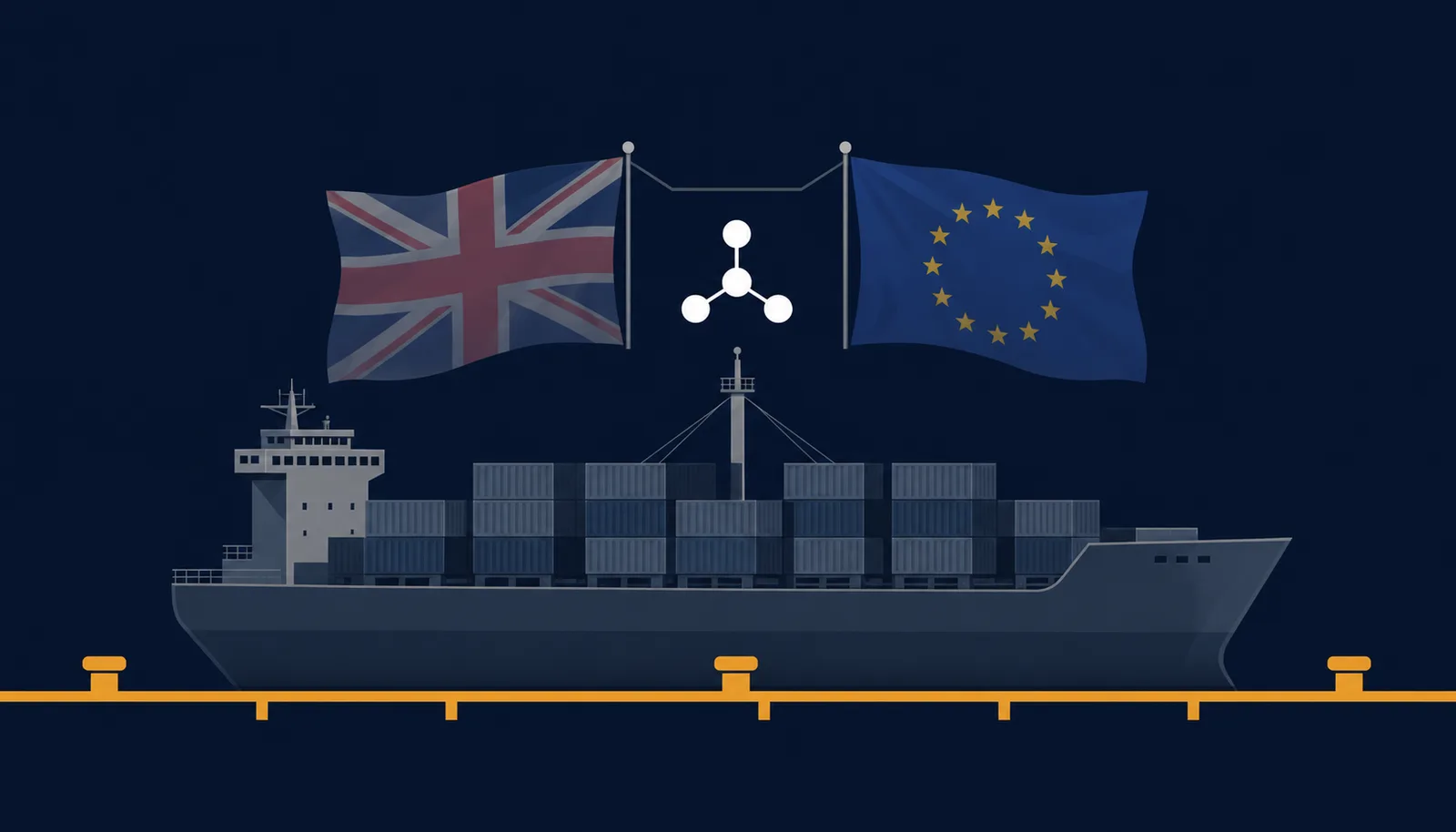
The UK Emissions Trading Scheme extended to maritime on July 1, 2026. Ships of 5,000 GT and above calling at UK ports now generate a carbon liability on every tonne of fuel burned alongside. The market response in the first week was close to zero. That silence is the story. The scheme was designed to land softly — a two-year surrender deferral, scope limited to domestic voyages and port emissions, and a UKA price roughly 25% below the EU equivalent.

2026-07-05
Two Carbon Markets, Six Days — What UK ETS Means for Every Ship Calling a British Port
Regulation8 min

Two Carbon Markets, Six Days — What UK ETS Means for Every Ship Calling a British Port

From July 1, 2026, every ship of 5,000 GT and above calling a UK port owes carbon allowances for berth time — even on international voyages. The UK now runs a separate carbon market from the EU, with different prices, different scopes, and different deadlines. Most operators have not yet submitted their Emissions Monitoring Plan.

June 25, 2026
What Is the IMO? — How One Small Office in London Sets the Rules for Almost Every Ship on the Sea
Regulation11 min

What Is the IMO? — How One Small Office in London Sets the Rules for Almost Every Ship on the Sea

The International Maritime Organization has fewer than 300 staff, a two-year budget under £80 million, and governs 99% of global trade by volume. Here's how this tiny UN agency works — and why its October 2026 vote could reshape shipping the same way IMO 2020 did five years ago.

June 4, 2026
The Two Maps of Maritime Labour — Where Crews Come From, and Where They Get Stranded
Regulation13 min

The Two Maps of Maritime Labour — Where Crews Come From, and Where They Get Stranded

In 2025, 6,223 seafarers were abandoned across 410 ships — the worst year on record. 82% of the ships flew flags of convenience. But the crews didn't come from St. Kitts or Panama. The labour map and the liability map don't overlap, and that gap is now a commercial risk variable.

June 3, 2026
Paused, Not Removed — What Section 301's Suspension Is Actually Costing
Regulation9 min

Paused, Not Removed — What Section 301's Suspension Is Actually Costing

USTR's Section 301 maritime fees took effect October 14, 2025 and were suspended on November 10, three and a half weeks later. The contracts being signed since then have continued to price the fee structure into their terms. What the suspension froze, what it did not, and why the next twelve months of newbuild orders, charter renewals, and fleet financing are pricing a fee that legally does not exist right now.

May 16, 2026
Why Your Next iPhone Might Cost More — Thanks to a Shipping Fee You've Never Heard Of
Regulation6 min

Why Your Next iPhone Might Cost More — Thanks to a Shipping Fee You've Never Heard Of

The U.S. now charges a fee on certain Chinese-built and Chinese-operated ships entering its ports — and it jumped 60% on April 17, 2026. The direct cost per imported product is tiny. The real story is what carriers are doing to avoid it, and how those workarounds are quietly reshaping prices on everything that crosses the Pacific.

May 13, 2026
The Friction Doesn't Disappear — It Just Moves
Regulation14 min

The Friction Doesn't Disappear — It Just Moves

Four corridors are absorbing the redistribution of Hormuz friction — but "alternative" doesn't mean cheaper. It means differently expensive, paid to different intermediaries, on different timelines. The infrastructure being built right now will outlast the crisis itself.

May 10, 2026
After MEPC 84: How a 5-Nation Coalition and the UAE Are Quietly Rewriting Shipping's Climate Future
Regulation13 min

After MEPC 84: How a 5-Nation Coalition and the UAE Are Quietly Rewriting Shipping's Climate Future

The US officially walked away from the IMO's carbon tax on May 2. Combined with UAE's OPEC exit four days earlier, the world's biggest flag states, biggest oil exporter, and biggest economy are now pushing in the same direction. A multi-angle analysis of what comes next.

May 4, 2026
MEPC 84 Outcome: What the IMO's Net-Zero Survival Means for Voyage Planners
Regulation10 min

MEPC 84 Outcome: What the IMO's Net-Zero Survival Means for Voyage Planners

The IMO's Net-Zero Framework survived US pushback, a new Northeast Atlantic ECA was approved, and global carbon pricing for shipping moved closer to reality. Here's what changes for voyage operators in 2026 and beyond.

May 2, 2026

Run the numbers yourself

Compare Suez, Cape, Panama, and NSR routes across 420+ ports. Free, no signup.

Launch Calculator →