Vessels & Fleet

Ship types, fleet structure, shadow fleet, yard capacity, and the supply side of shipping markets.

7 articles

The supply side of shipping is measured in steel: how many vessels exist, how old they are, how many are being built, how many operate outside the mainstream system. This section covers vessel classification by size and type (VLCC, Suezmax, Aframax, Capesize, Panamax, container classes), fleet age and orderbook analysis, shadow fleet dynamics, yard capacity constraints, and the structural supply factors that set the floor under freight rates.

Future coverage will expand to include ship vetting (SIRE, CDI, RightShip), dry docking cycles, main engine types, and the technical inspections that determine whether a vessel can trade.

1,300 Tankers Outside the System — How the Shadow Fleet Repriced the Ships That Stayed
Vessels & Fleet11 min

1,300 Tankers Outside the System — How the Shadow Fleet Repriced the Ships That Stayed

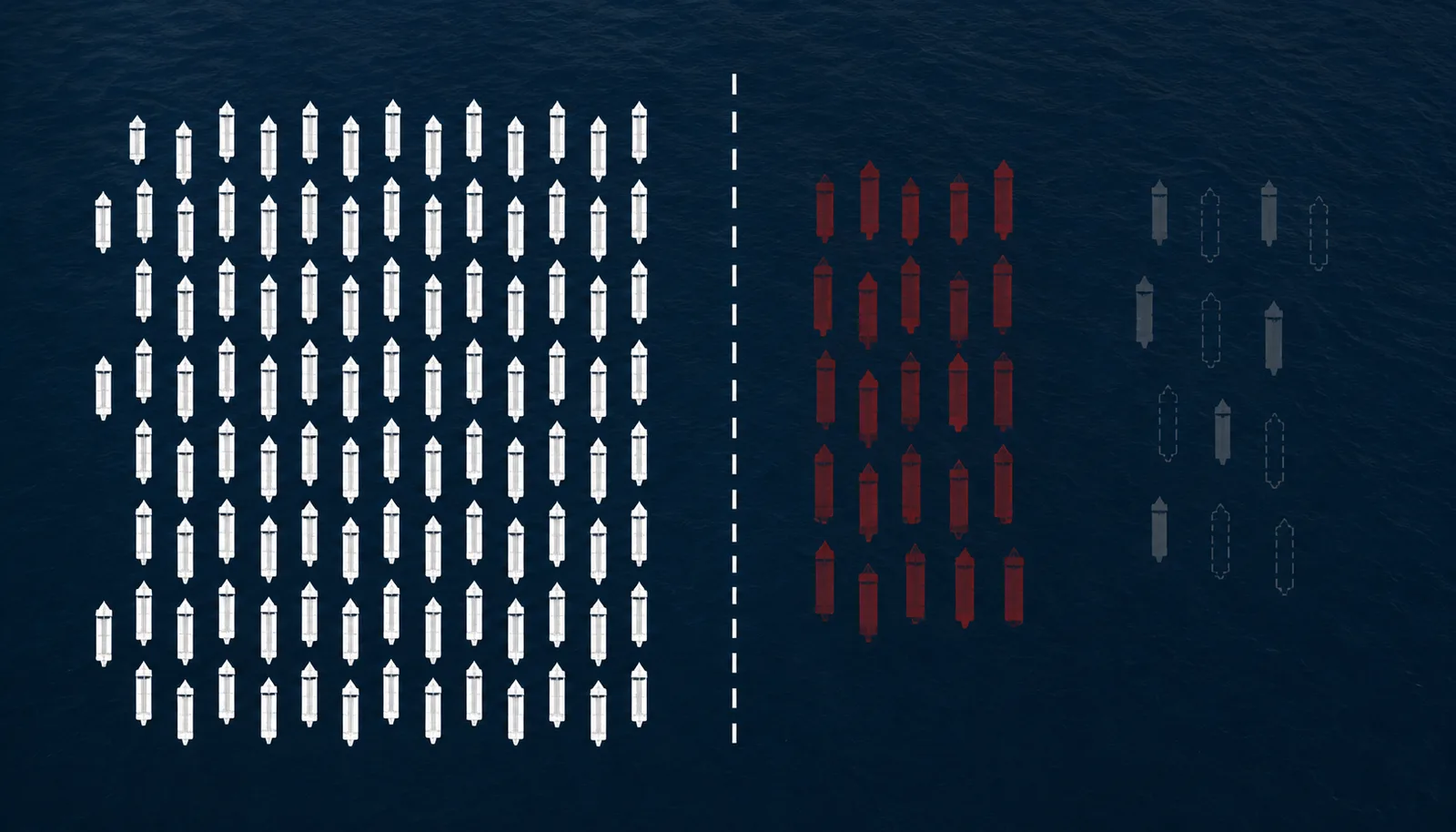
Ukraine's catalog lists 1,337 vessels. Windward classifies over 1,000 as gray or dark. The IMO flags 367 as false-flagged. The numbers differ because the definitions differ — but the market consequence is the same. Every tanker that leaves the mainstream system is a unit of supply removed from the pool that sets the visible rate. The shadow fleet did not just evade sanctions. It repriced the ships that chose to follow them.

June 18, 2026
900 VLCCs on Paper. 700 Available. The Fleet Gap Nobody Talks About
Vessels & Fleet10 min

900 VLCCs on Paper. 700 Available. The Fleet Gap Nobody Talks About

In 2024, one new VLCC was delivered worldwide. One. In 2025, five. The historical average is forty per year. Meanwhile, 130 VLCCs older than twenty years remain in commercial operation — the highest proportion in fleet history. The orderbook has recovered from its 2023 low, and Greek owners placed 52 orders last year alone. The nominal fleet is growing. The effective supply is not. The secondhand premium at 2.4 times the long-run median is the market's way of saying so.

June 11, 2026
The Yards Cannot Build Two Things at Once — Why June's Order Burst Is a Zero-Sum Game Between Sectors
Vessels & Fleet10 min

The Yards Cannot Build Two Things at Once — Why June's Order Burst Is a Zero-Sum Game Between Sectors

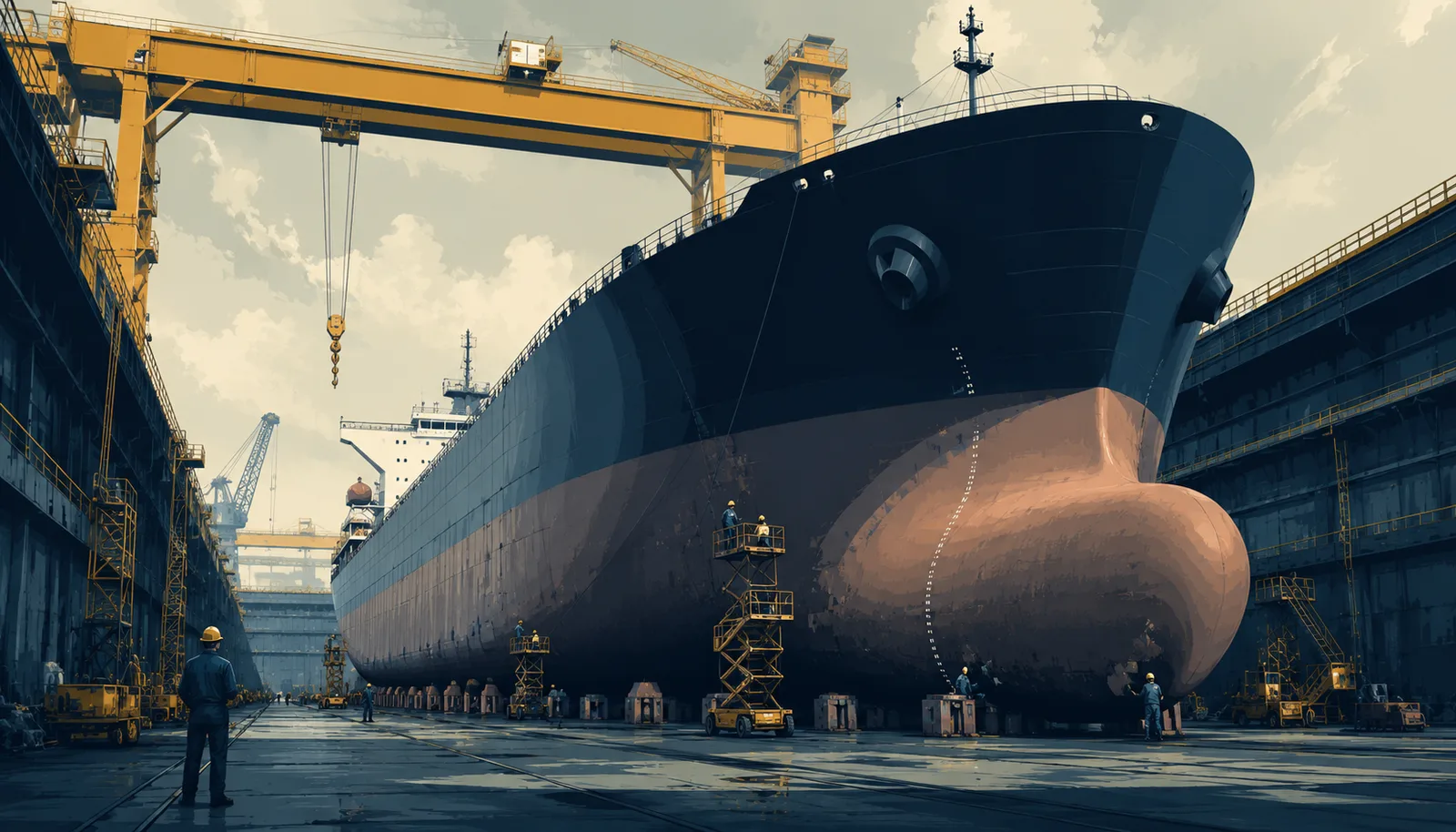
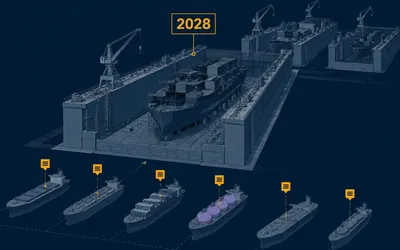
In the first week of June, four billion dollars in newbuild orders crossed the desks of yards in China and South Korea. Every slot taken was a slot some other sector cannot have. The global market reads the orderbook as a supply forecast. The yards read it as a production calendar — and the calendar is full until 2028.

June 8, 2026
A Ship's Weight Is Five Different Numbers — And Two of Them Aren't Weight at All
Vessels & Fleet8 min

A Ship's Weight Is Five Different Numbers — And Two of Them Aren't Weight at All

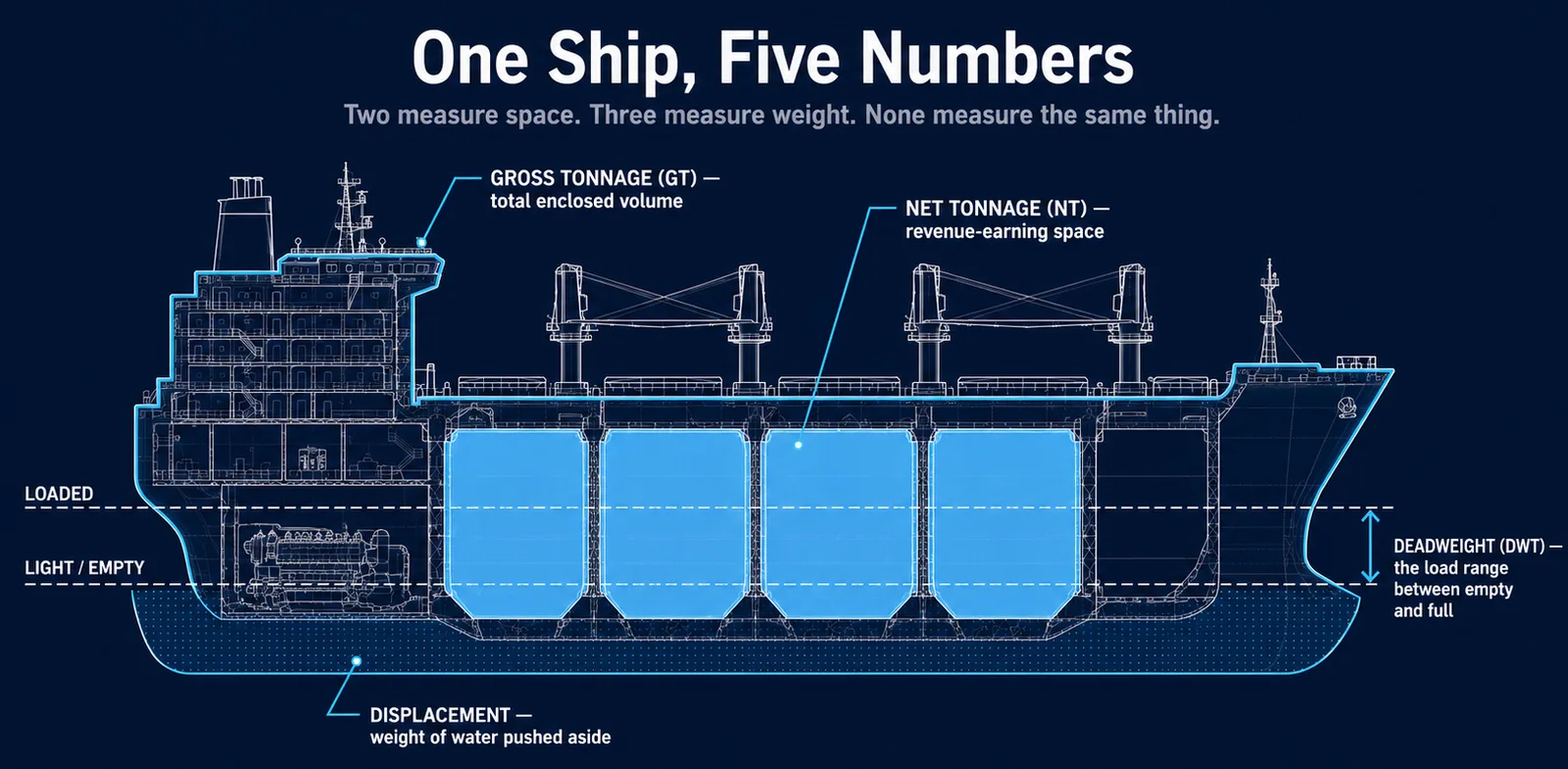
When a news report says a ship is "150,000 tonnes," it could mean five completely different things — and two of them have nothing to do with weight. A ship's tonnage is one of maritime's most confusing pieces of vocabulary, because the word "ton" got borrowed, redefined, and split into a half-dozen meanings over centuries. Here is the plain version: what each number measures, and which one matters when.

May 28, 2026
Container Ships Explained — Feedermax, Panamax, ULCS, and Why They Keep Getting Bigger
Vessels & Fleet9 min

Container Ships Explained — Feedermax, Panamax, ULCS, and Why They Keep Getting Bigger

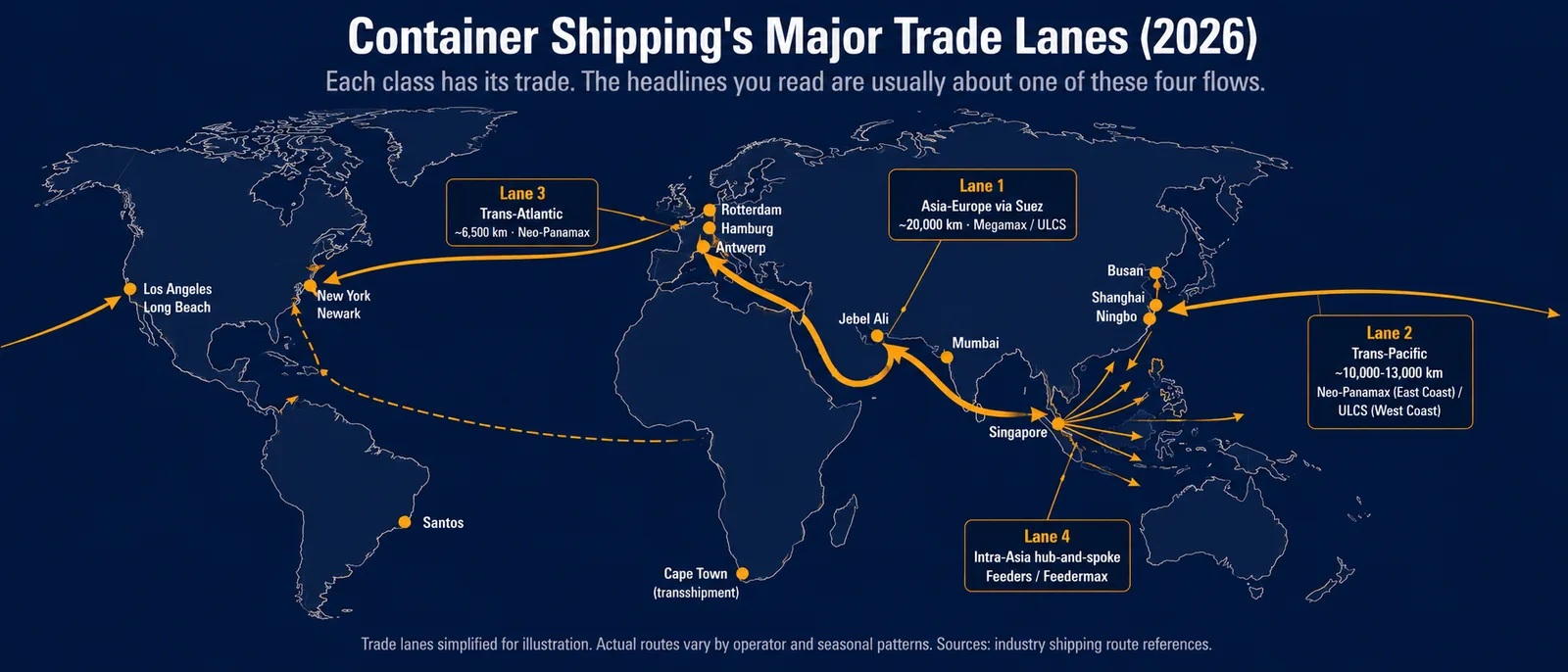
Until 1988, the largest container ship in the world carried 4,300 TEU — roughly what fits on the top deck of a modern Megamax. In the 38 years since, container ships have grown by more than five times, with each step named after a canal, a port, or a strait it broke through. A plain guide to the size labels that quietly organize 80 percent of world trade.

May 26, 2026
Bulk Carrier Sizes Explained — Capesize, Panamax, Supramax, and the Rest
Vessels & Fleet8 min

Bulk Carrier Sizes Explained — Capesize, Panamax, Supramax, and the Rest

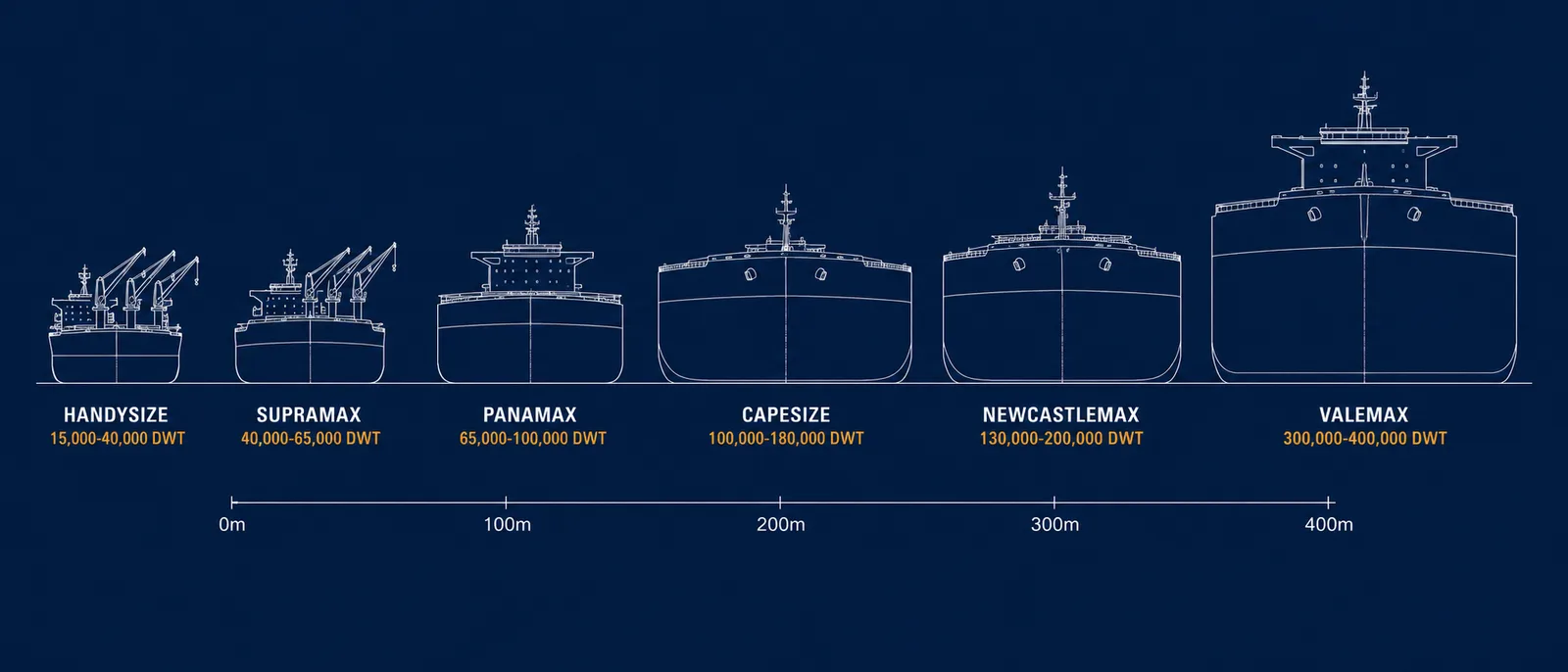
Bulk carrier size names look technical but they're really shorthand for trade patterns. A Capesize means iron ore. A Panamax hints at grain or coal. About 70% of the world's seaborne iron ore moves on Capesize alone — which is why a single commodity can move the entire BDI. A plain guide to the size labels that quietly organize the dry bulk fleet.

May 22, 2026
VLCC, Suezmax, Aframax — Every Tanker Size in 8 Minutes
Vessels & Fleet8 min

VLCC, Suezmax, Aframax — Every Tanker Size in 8 Minutes

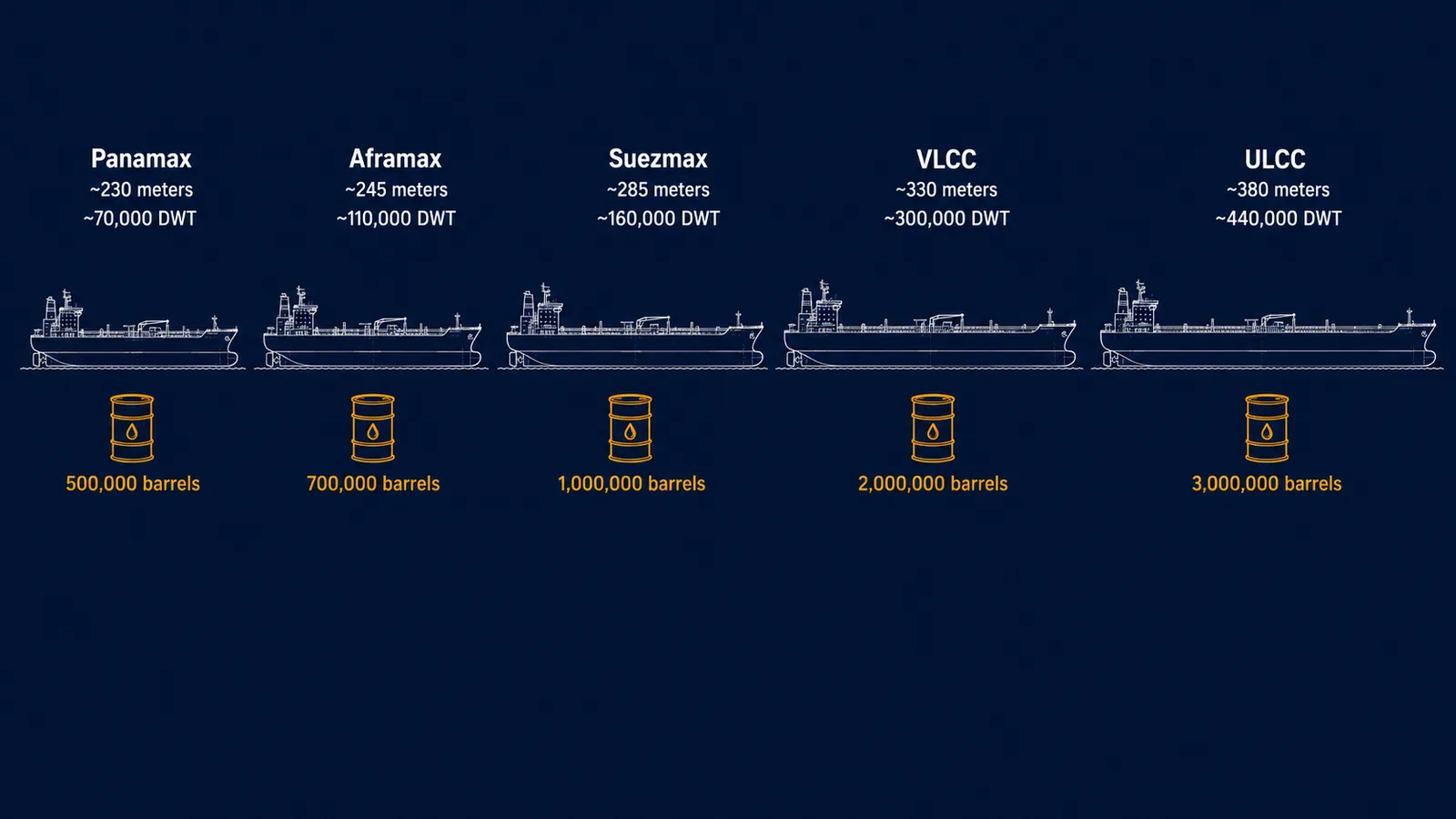
A tanker can be longer than the Eiffel Tower is tall and carry two million barrels of oil, yet the industry refers to it with four letters: VLCC. A plain guide to the size labels that quietly organize the entire global tanker fleet — what each class measures, why each name exists, and what each one tells you when it shows up in a headline.

May 20, 2026

Run the numbers yourself

Compare Suez, Cape, Panama, and NSR routes across 420+ ports. Free, no signup.

Launch Calculator →